Omihachiman and W. M. Vories (1)
Though it’s now last year’s news since the new year has begun, 2025 marked the 120th anniversary of William Merrell Vories’ (1880-1964) arrival in Japan.
After graduating from the University of Colorado in the United States in 1904, he came to Japan the following year as an English teacher at Shiga Prefectural Commercial School. He arrived in Hachiman Town on February 2, 1905.
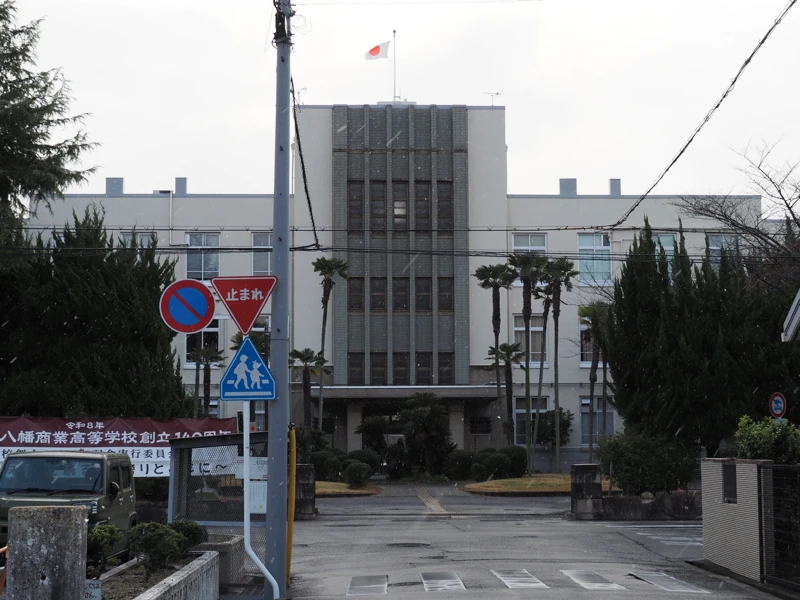
The photograph shows the school building of Shiga Prefectural Hachiman Commercial High School (originally named Shiga Prefectural Commercial School).
This building was constructed in 1940 based on Vories’s design. He worked here as an English teacher for two years, but was dismissed after issues arose concerning his holding Bible study groups after school hours for Christian missionary work.
It is a remarkable coincidence that, some thirty-odd years later, he ended up designing the school building for the very institution where he had once worked.
Last year, a council comprising companies, tourism operators, and government bodies associated with Vories took the lead in organizing events such as lectures to commemorate the 120th anniversary of Vories’s arrival in Japan.
I participated in the viewing sessions and guided tours held in December, which allowed me to see Vories’s architecture. While most buildings were only viewable from the outside, several could be toured inside as well.
While over 20 Vories buildings still exist in Omihachiman City, I cannot cover them all. Therefore, I will introduce only the buildings I visited, listed in chronological order of construction.
Though I have no photos, let’s begin with the first building Vories designed.
He designed his first building during his time as a teacher. The Hachiman YMCA Hall, built in 1907, is the first building designed by Vories.
However, the hall built at that time no longer exists; the current building is the second version, rebuilt in 1935. (I will touch on the current hall in the next article.)
Vories was dismissed from his position at Shiga Prefectural Commercial School in 1908.
That same year, he was asked to serve as site supervisor for the Kyoto Sanjo YMCA Hall and opened an architectural design and management office in Kyoto. This became the catalyst for establishing “Vories Partnership” in 1910.
The Waterhouse Memorial House is a residence built in 1913. It is so named because it was home to the American Paul Waterhouse family.
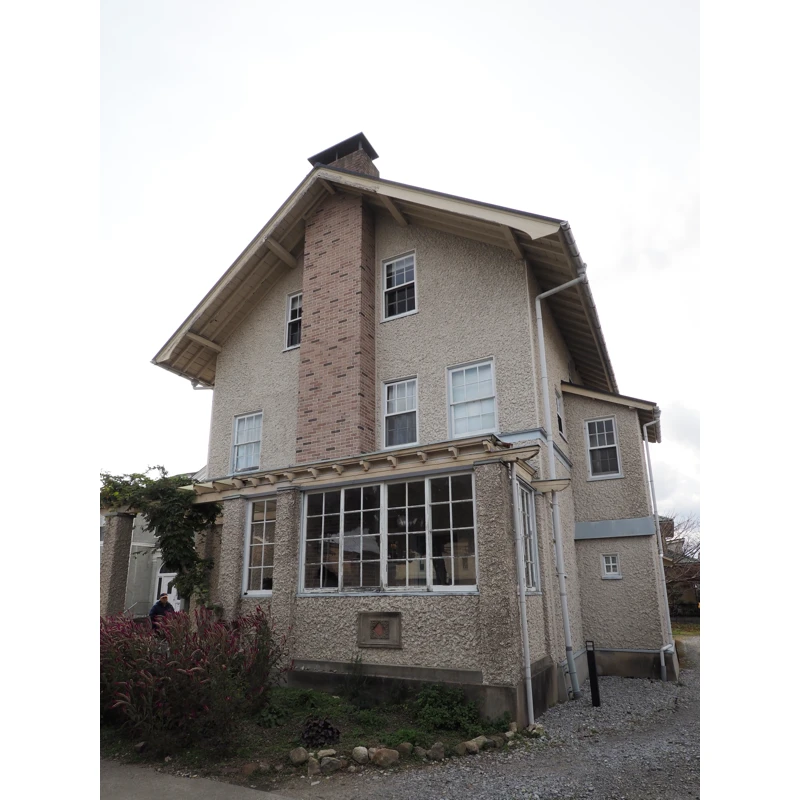
In this vicinity, other structures were built including the Yoshida Residence (1913), the Vories Residence (1914: demolished), and the Former Omi Mission Double House (1921), along with tennis courts, forming a district of Western-style buildings.
The Waterhouse Memorial Hall has now been renovated and is utilized as lodging facilities and restaurants.
In 1915, the Vories Partnership Tokyo Office was also established.
The Meiji Gakuin Chapel (Minato Ward, Tokyo), completed in 1916, was also designed by Vories.
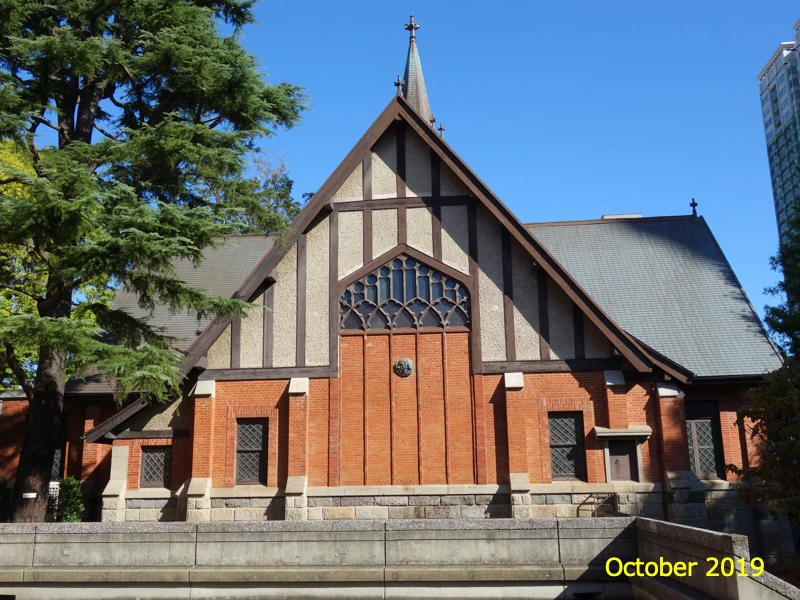
I found an old photograph I had taken and included it here.
Vories married Makiko Hitotsuyanagi in 1919, and their wedding ceremony was held in this chapel.
The next photograph shows the former main building of the Vories Memorial Hospital (Tucker House), completed in 1918. It was then called the Omi Sanatorium.
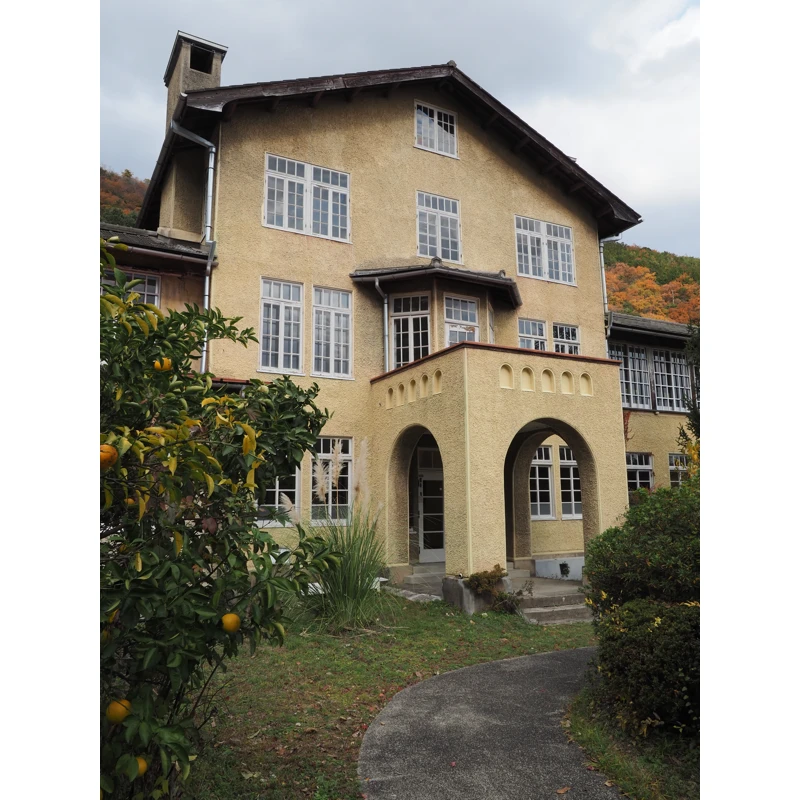
The front of the building is narrow, so I couldn’t capture the entire structure in the photo.
It was used as a hospital ward until around 1980, then solely as an administration building until its closure in 2000. The hospital planned to demolish it, but opposition arose, leading to its preservation. Seismic retrofitting and renovation work began in 2012 and took ten years to complete. Currently, guided tours by volunteers are occasionally held.
The Tucker House is built on a slope, so its rear entrance is on the second floor.
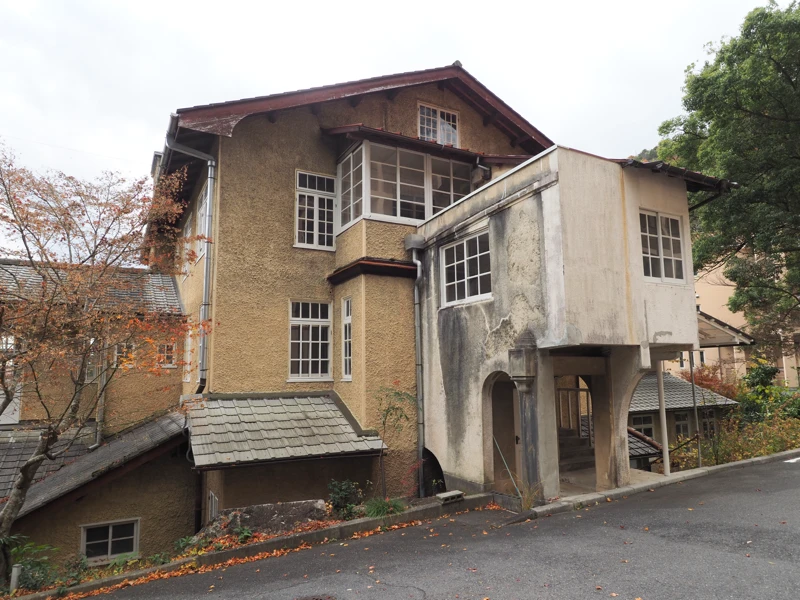
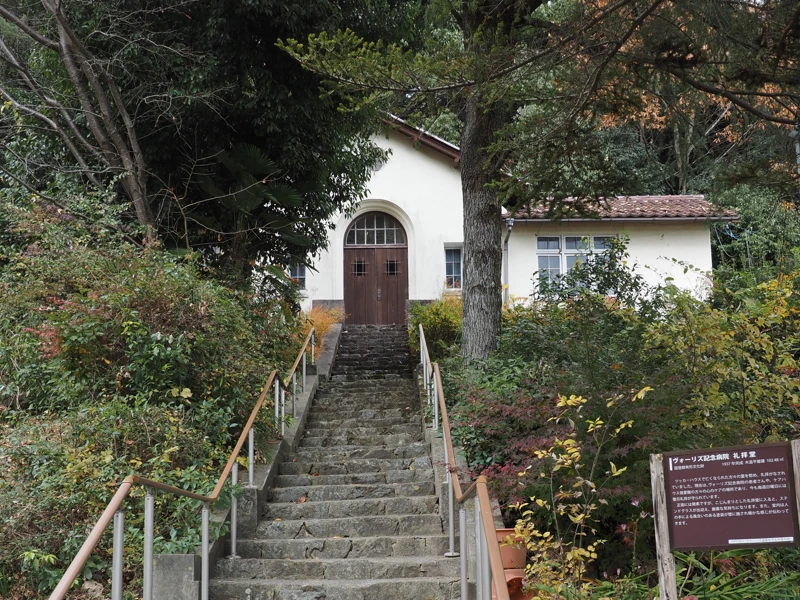
Facing the mountain from that spot, we can see the chapel beyond the stairs. However, it was built much later than the main building, in 1937.
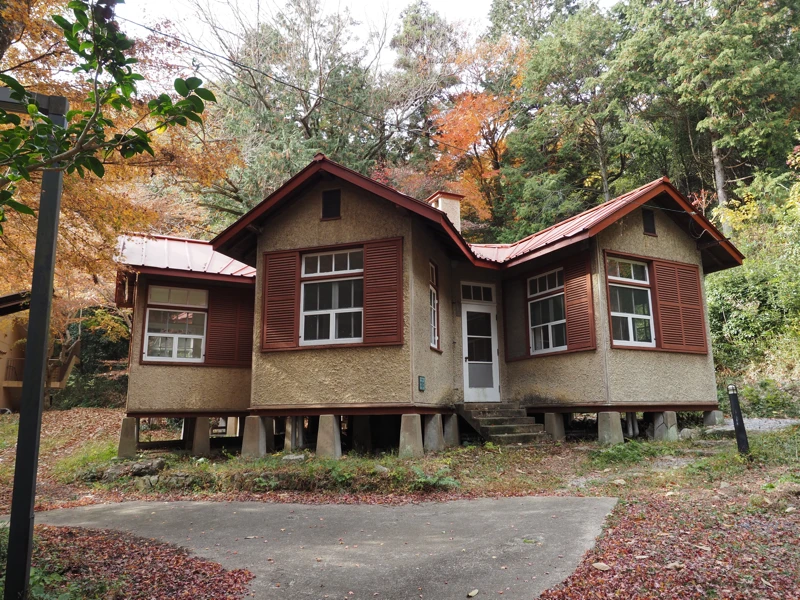
Climbing slightly past the chapel, you’ll find the “Goyokan" at the rear, originally constructed as a small infirmary. Goyakan means “five-leaf building,” named for its five patient rooms arranged like maple leaves. It seems it was originally called Kibokan (Hope Hall). This building dates from 1918, the same year as Tucker House.
In 1920, the Vories Partnership was dissolved, and the Vories Architectural Office and Omi Sales Co., Ltd. were established. Omi Sales primarily handled the import and sale of building materials.
The former Hachiman Post Office was built in 1921.
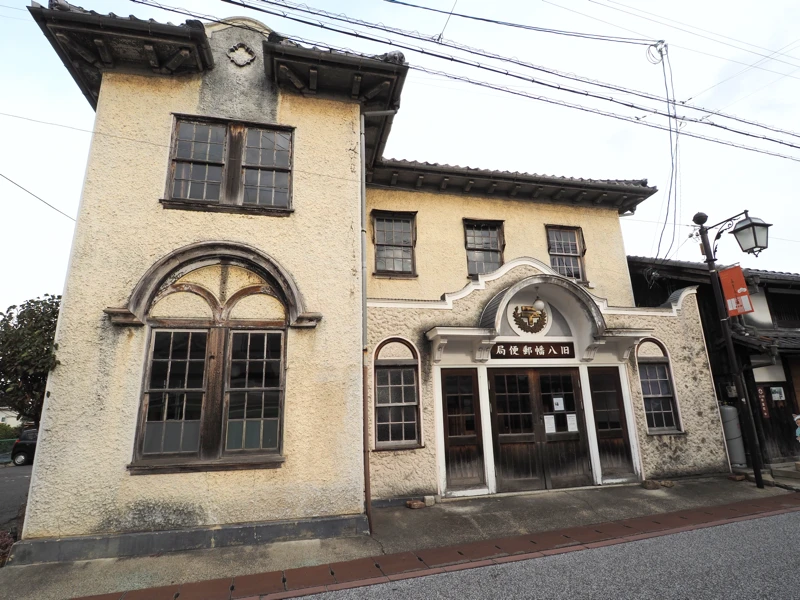
It served as a post office until 1960, then was used as an office and warehouse, but stood vacant for some time. Volunteers who participated in the 1994 Vories Commemorative Symposium began activities as the Hitotsubu-no-Kai Association and have worked on its preservation and restoration.
The entrance area had been demolished when the building was vacant but was restored in 2004.
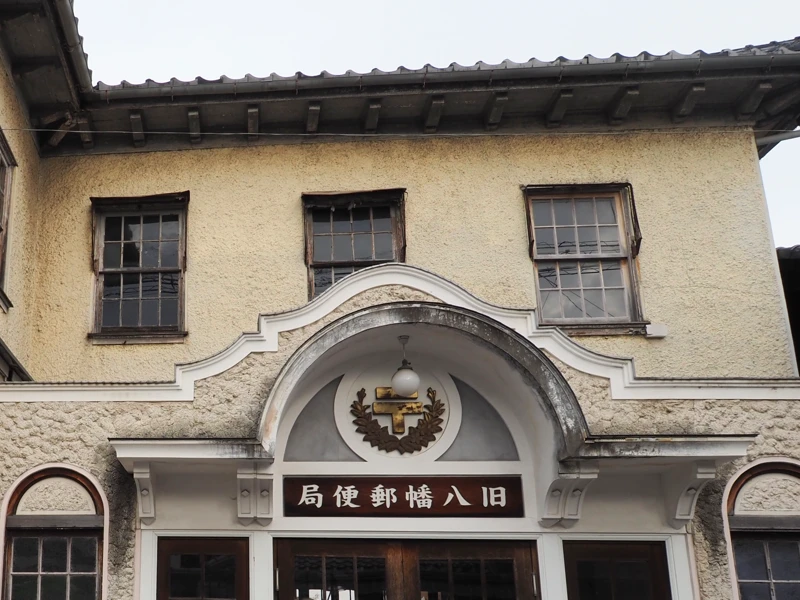
We couldn’t enter the former Hachiman Post Office building, but it’s open to the public on Saturdays and Sundays from 11:00 AM to 5:00 PM (no reservation required).
The next photo shows the Koshun-en Columbarium in Kitanosho, Omihachiman City. It was built in 1928.
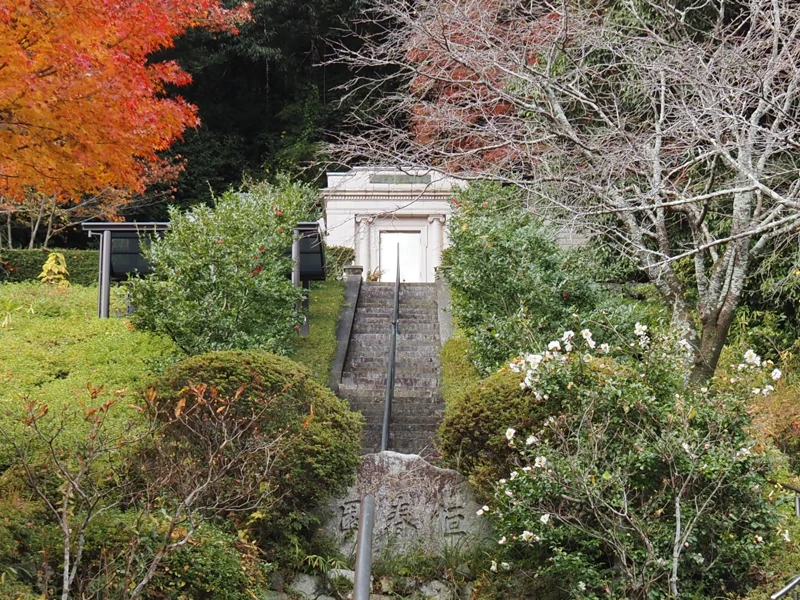
Koshun-en is a cemetery operated by Omi Brotherhood Ltd, located about 500 meters south of the Tucker House.
The remains of Vories, who passed away in 1964, are also interred here.
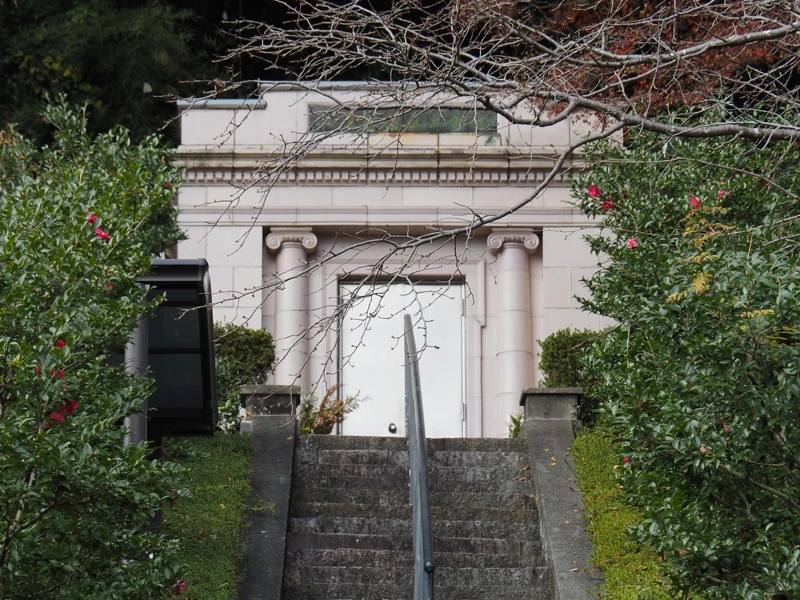
Next, I plan to introduce buildings constructed during the Showa period, but that will be covered in the next article.
(To be continued)
[References] (All written in Japanese)
“Japanese Architecture: Meiji, Taisho, Showa, Vol. 6” (by Yamaguchi Hiroshi / Sanseido / 1979)
“Guidebook to Modern Architecture: Kansai Edition” (by Ishida Junichiro et al. / Kashima Publishing / 1984)
“W. Merrell Vories (Hitotsuyanagi Merell): Building ‘God’s Kingdom’ in Omi” (Okumura Naohiko / Omi Brotherhood, Kosei-sha / 1986)
“Street Corner Renaissance: Western Architecture Alive in the Lake Country (Omi Bunka Sosho; 24)” (Masuda Koichi, ed. / Sunbright Publishing / 1986)
“Vories’ Architecture: Mission Utopia and the Flower of the City” (by Yamagata Masaaki / Sogensha / 1989)
“Shiga Prefecture Modern Architecture Survey Report” (edited by Shiga Prefectural Board of Education, Cultural Properties Protection Division / Shiga Prefectural Board of Education / 1990)