Moka City Kubo Auditorium
After viewing the former Ouchi Village Office, I headed to the Moka City Kubo Auditorium.
Originally built as the auditorium for Moka Elementary School, it was later relocated to its current site.
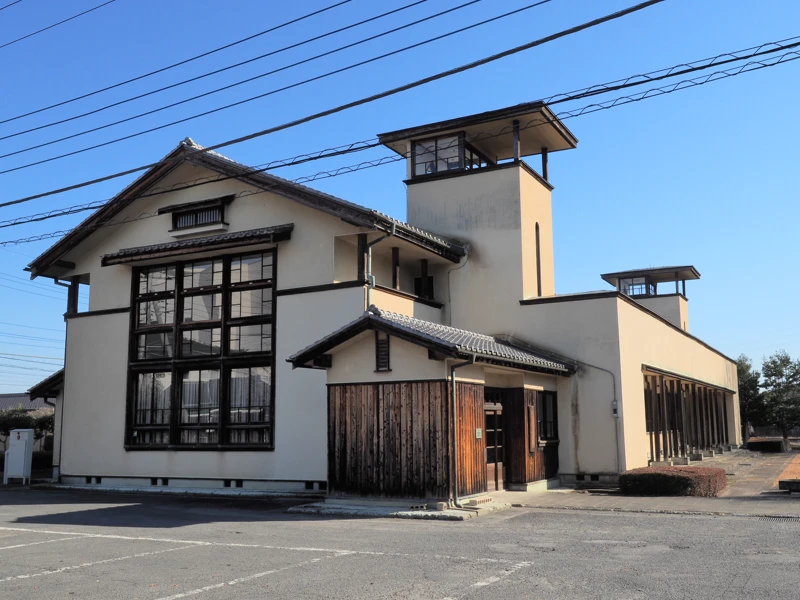
In 1937, Kubo Teijiro (1909–1996), an art critic residing in the city, offered to donate the auditorium to the elementary school “in celebration of his grandfather Kubo Rokuhei’s 80th birthday.”
The design was handled by Endo Arata (1889–1951), and the auditorium was completed in 1938.
In gratitude for the donation, the hall was named “Kubo Auditorium.”
Kubo Auditorium served not only as an elementary school facility but was also widely used as a venue for community gatherings and events. It often hosted large assemblies not just for townspeople but for the entire county.
The building features two towers. While the towers and the south wall are mortar finish, the entrance area has board siding.
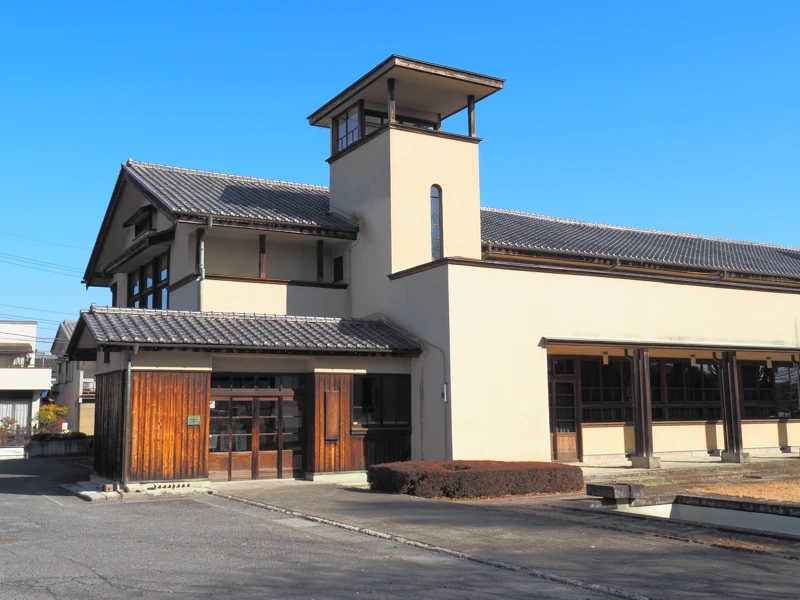
This is the entrance area. The nameplate on the right is illegible in the photo, but up close it was carved with “Kubo Auditorium.” On the left is a plaque designating it as a Registered Tangible Cultural Property. It was registered in 1977.
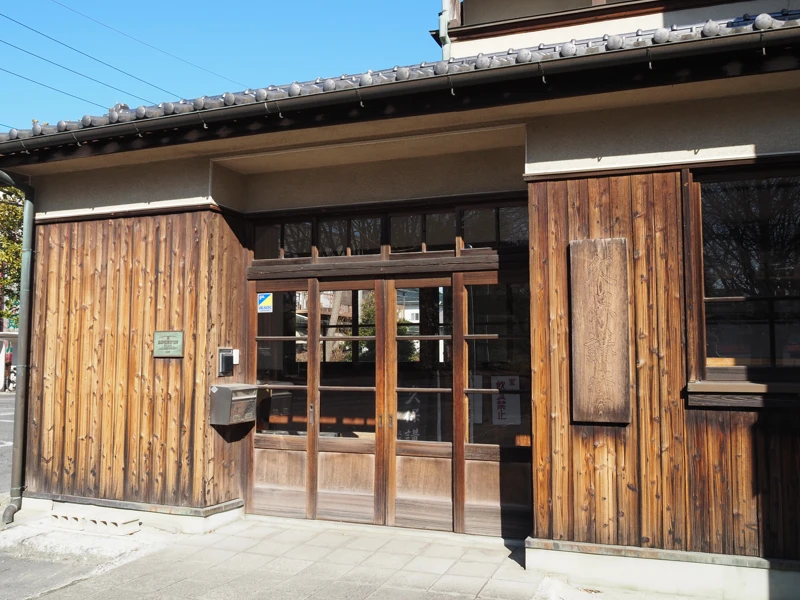
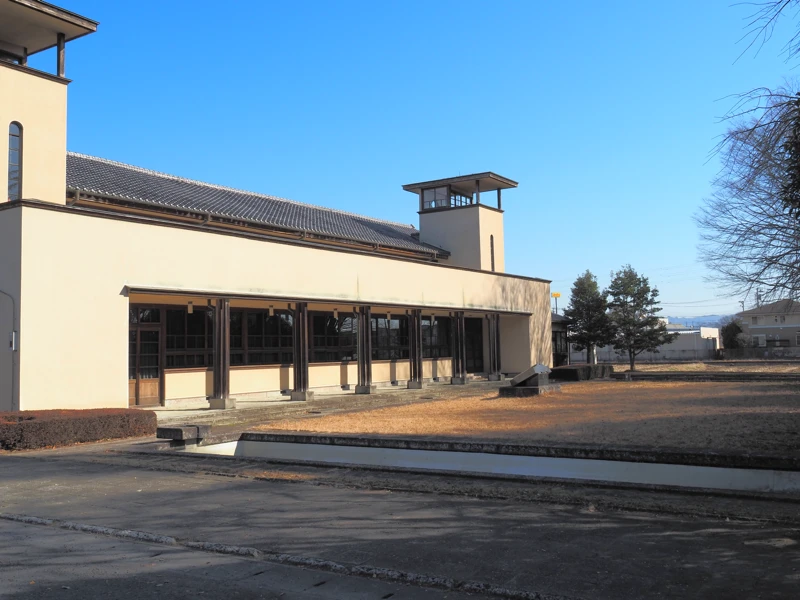
The front of the auditorium has a balcony on the second floor, with a terrace below it.
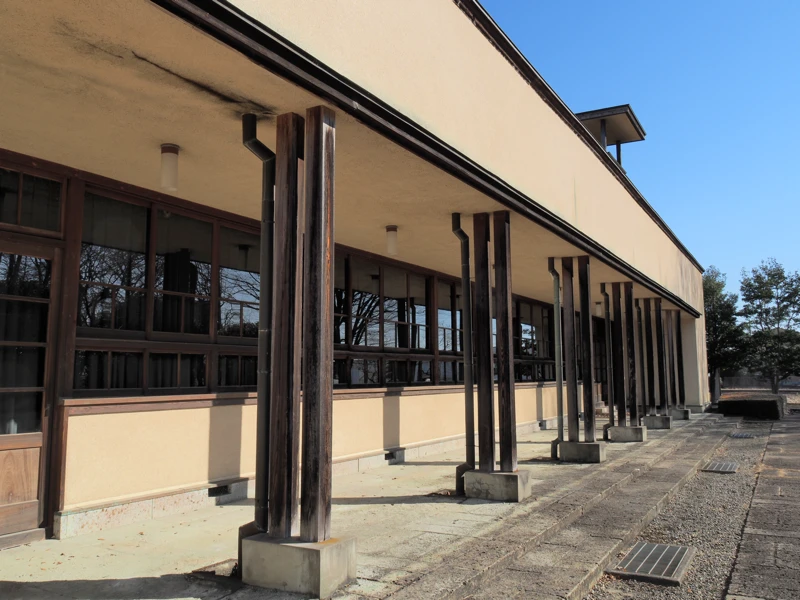
Viewed from the south, you can see the building is symmetrical.
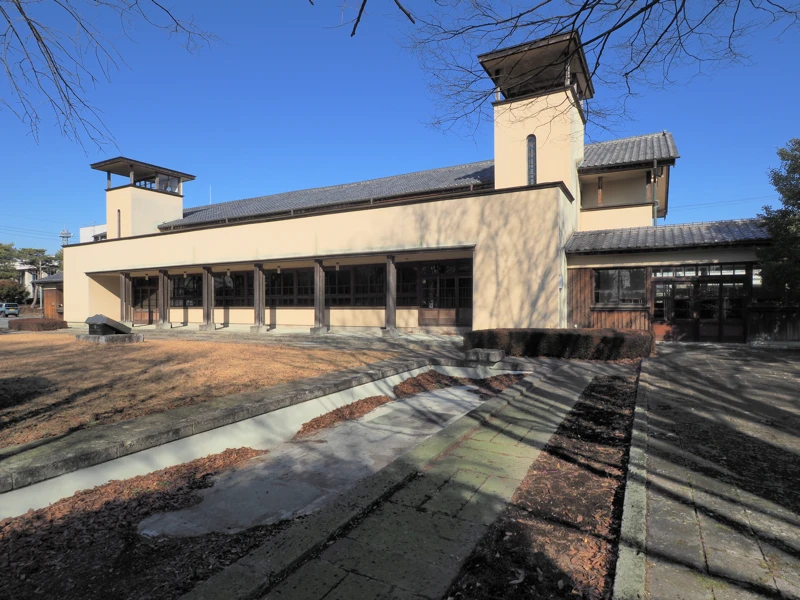
I walked around the building. This is the east wall. It has fewer windows than the west side.
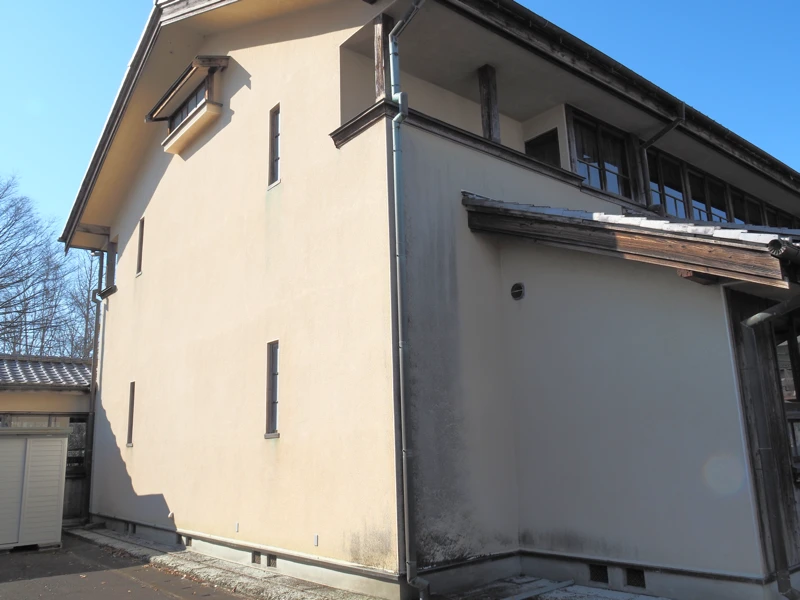
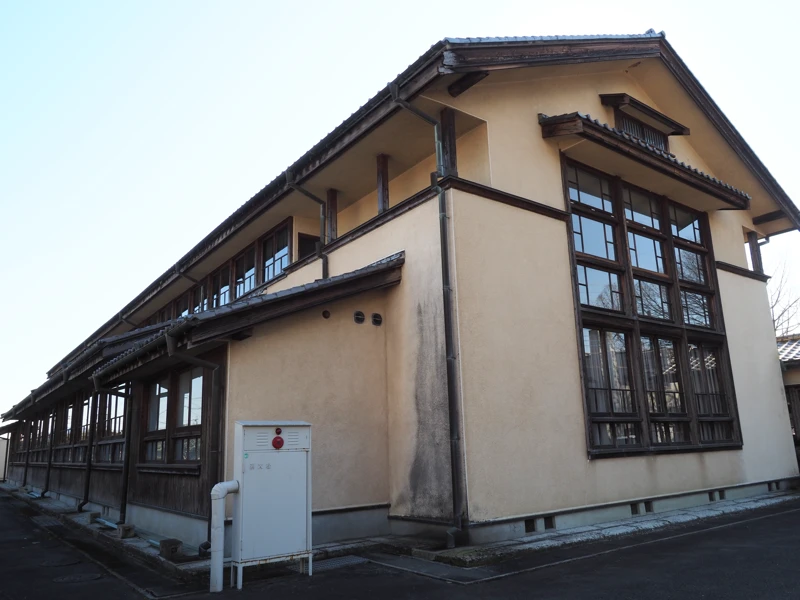
This is the north side. I was a bit surprised because it looks quite different from the south side.
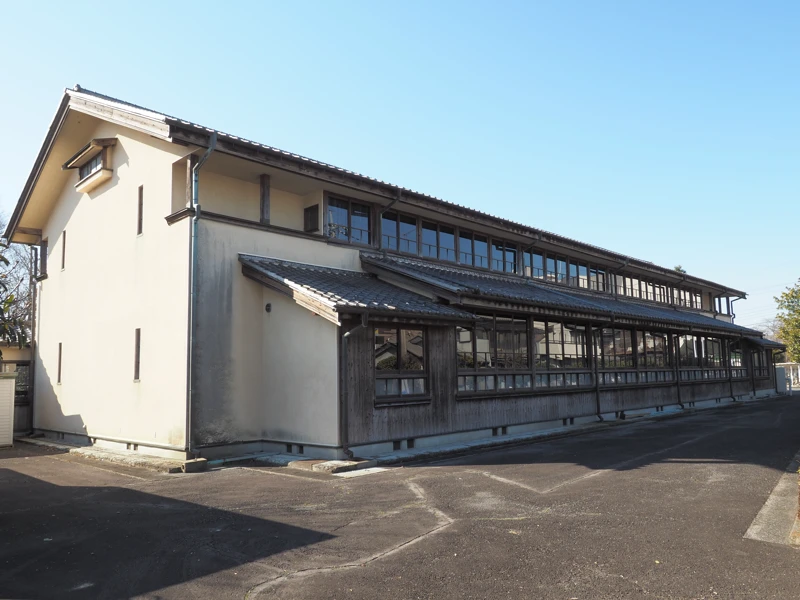
The north wall. The area of window glass is larger than the wooden paneling.
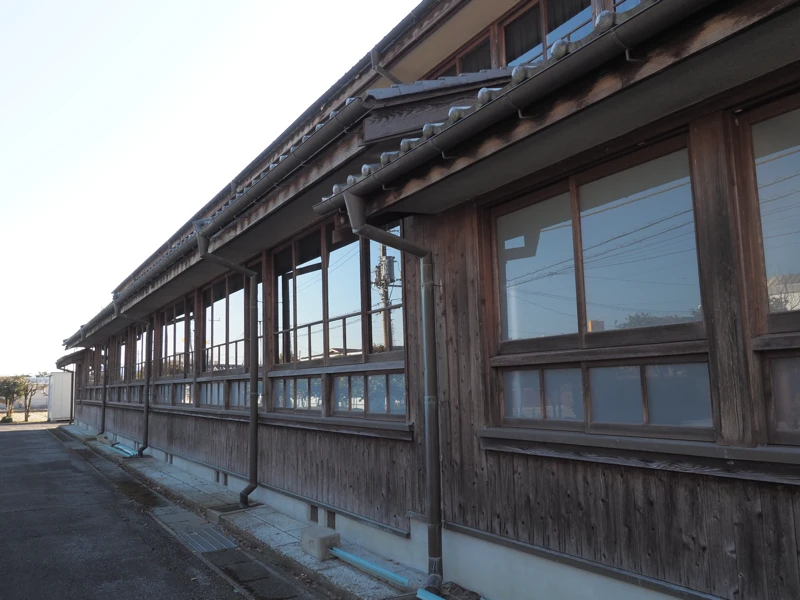
I walked all the way around the building.
As I mentioned earlier, the current auditorium was relocated. Let’s look at an aerial photo showing its appearance before relocation. While the balcony now faces south (south-southwest), it originally faced east (east southeast) before being moved.
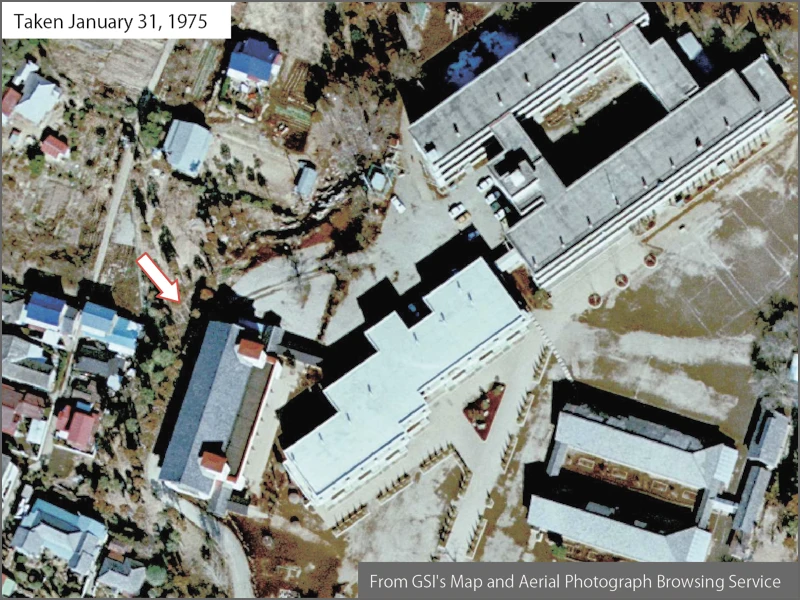
The auditorium adjoins the western edge of the school grounds. Naturally, from that position, the balcony side becomes the “front” and the opposite side the “back.”
However, the positioning relative to the school building is off, making the balcony seem cramped.
But this indicates the school building was constructed later. Let’s look at an older photo.
This is an aerial photograph from 1947.
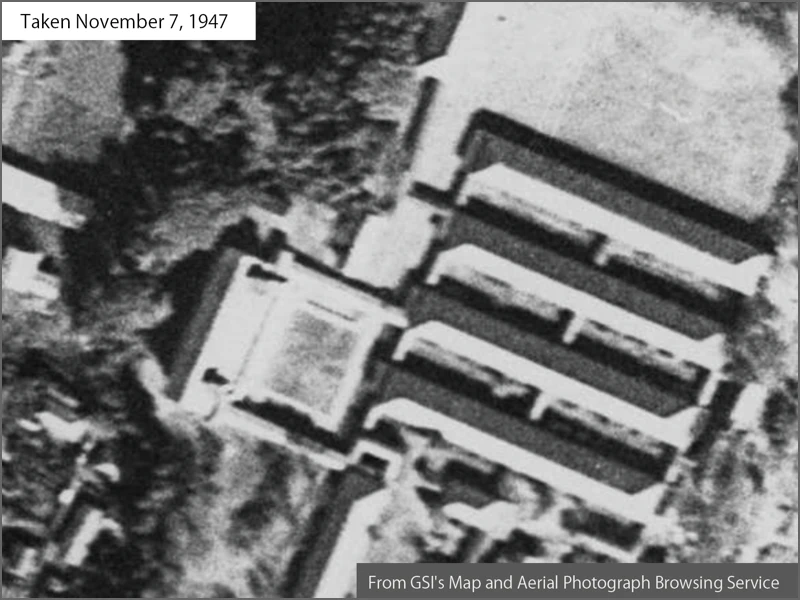
Looking at this, the school building and auditorium are neatly aligned. They are connected by two covered walkways, with a courtyard between them. The balcony facing the courtyard and the first-floor terrace clearly form the auditorium’s “front.”
The west side of the auditorium is located at the edge of the school grounds, with a forest behind it, making this side inevitably the “rear.” Given the auditorium’s position, it makes sense that the front and rear were designed this way.
Even after relocation, the courtyard space was preserved, and the two ponds that had been in the courtyard were recreated. However, when I visited, I didn’t know about the auditorium’s original construction, so I couldn’t grasp the meaning of the plaza on the south side of the building.
Only after looking at old aerial photos did I finally understand that this space recreated the courtyard that existed before the relocation.
By the Showa 50s (late 1970s or early 1980s), the building had deteriorated, and demolition was considered.
In response, alumni organized the “Save Kubo Auditorium Association” and launched a preservation campaign. As a result, the auditorium was relocated and preserved.
In 1986, the relocated auditorium opened at its current location as the “Moka City Kubo Auditorium” and began serving as an arts and cultural facility.
This time I only saw the exterior, but I hope to see inside someday.
[Reference]
“Moka City History, Volume 8 (Modern and Contemporary General History)” (Compiled by the Moka City History Compilation Committee / Moka City / 1988)