Former Toyosato Elementary School (2)
This photo shows the exterior of the former Toyosato Elementary School auditorium. Standing in front of the main building, we can see this structure to the right.
It is a reinforced concrete building constructed in 1937.
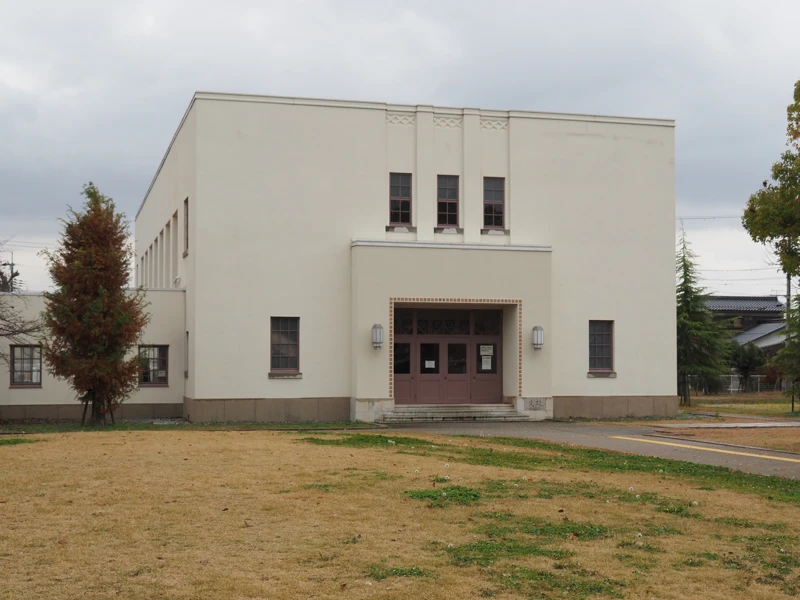
Although the auditorium has its own entrance, general visitors cannot enter through it. The auditorium is connected to the main building by a corridor, so we must pass through the main building to reach it.
Turning right from the main entrance hallway leads to the former student entrance.
A blackboard for writing monthly schedules is on the wall.
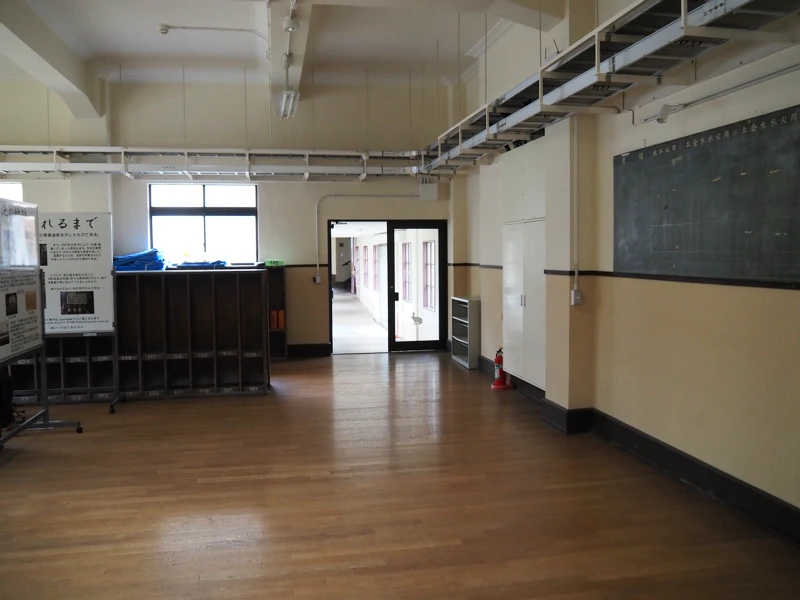
And some panels are partially visible on the left; it explained the irrigation water intake facilities called Tatsugaike and Sunayamaike located within the town. (This will be covered in a separate article.)
This is the connecting corridor.

The former Toyosato Elementary School building is available for rental to the public for a fee. If you apply, you can use the classrooms or the auditorium. The auditorium is intended for use in music events, lectures, and similar functions. It also appears to be used for school events.
During rental periods, public viewing is not permitted, so a “In Use – No Entry” sign is prepared.
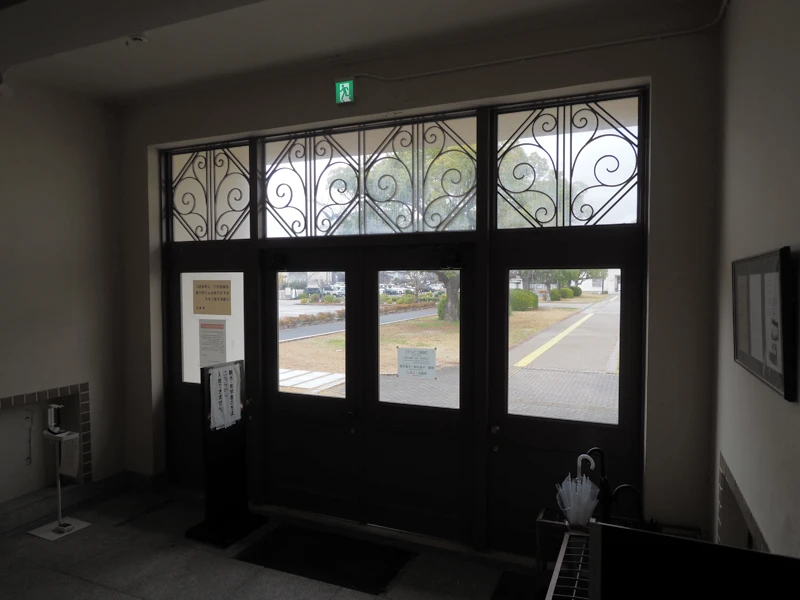
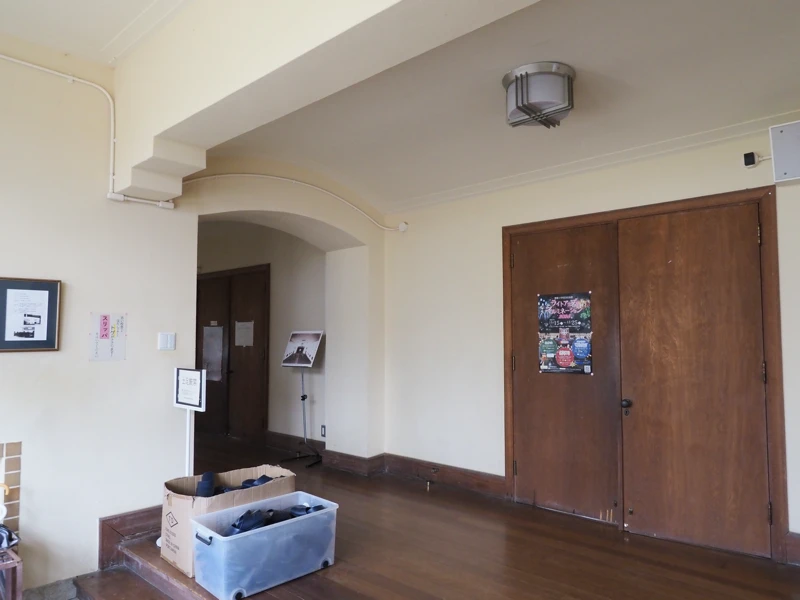
This is the interior of the auditorium entrance.
They probably open this door when using it for events. The glass decoration above the door is nice.
On the right wall, the registration certificate and explanatory text for the Registered Tangible Cultural Property were displayed.
The registration was in 2013, with the Main Building, Auditorium, and Library each registered.
The explanatory text stated:
“Located south of the front of the main building, connected by a corridor. A reinforced concrete structure with one story, partially two stories, and a basement. Like the main building, it possesses a simple and orderly exterior. Internally, it consists of a single auditorium space, a mezzanine gallery, and a basement boiler room. Together with the school building and library, it conveys the modern appearance of the time of its construction.”
I initially thought this text was from the Agency for Cultural Affairs website, but upon later comparison, the phrasing differed slightly.
The Cultural Heritage Online website states the following (accessed 2025-12-30):
“The north-facing auditorium stands in front of the south side of the school building and is connected by a corridor. It is a two-story reinforced concrete structure with a building area of 518 square meters, featuring a boiler room in the basement at its southern end. Its orderly exterior, based on the same modernist principles as the main school building, conveys the imposing presence it held at the time of construction, alongside the main school building and library."
“Conveying its modern appearance” and “conveying its imposing presence” seem to have quite different nuances…
The phrasing also differs between “single-story with a partially two-story section” and “two-story building.”
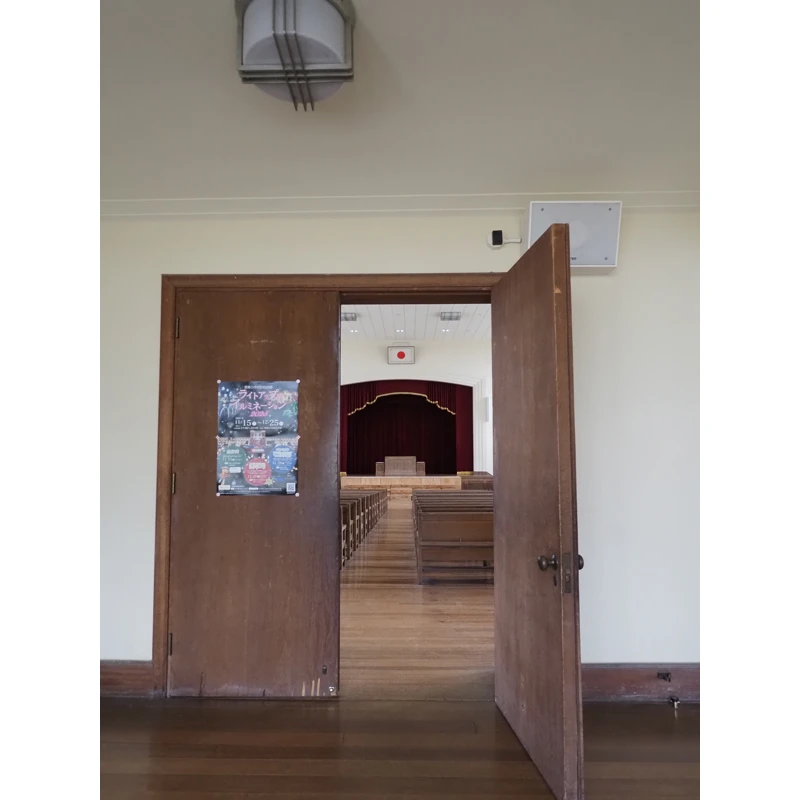
The entrance to the auditorium, photographed from the entrance hall.
Now let’s step inside.
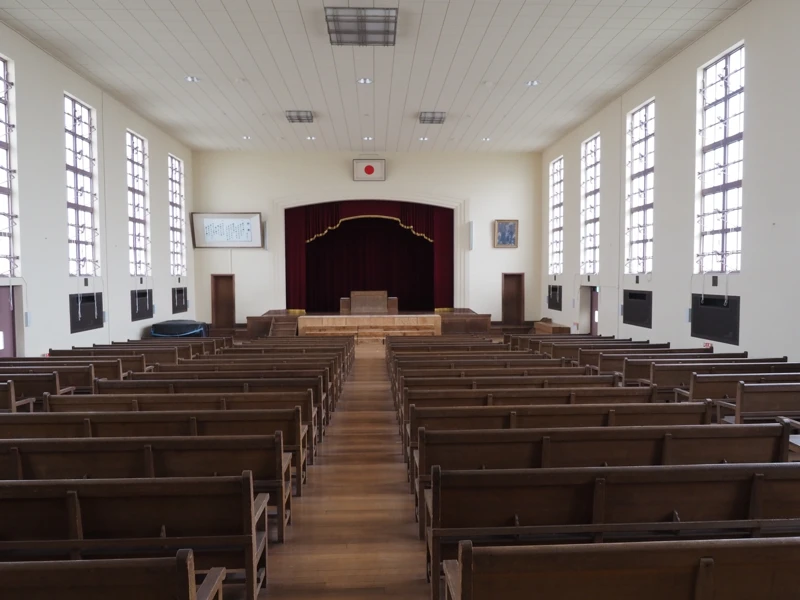
A stage stands at the front, with wooden chairs arranged in rows.
The ceiling and walls are white and bright. In 2009, it underwent seismic reinforcement and interior renovations, reborn as a hall open to the public.
To the left, you can see a piano. It’s a Steinway shipped from Hamburg, Germany, in 1928. It’s still in use today.
Since no one else is here, I have it all to myself.
Hanging to the left of the stage is a framed sheet of the school song.
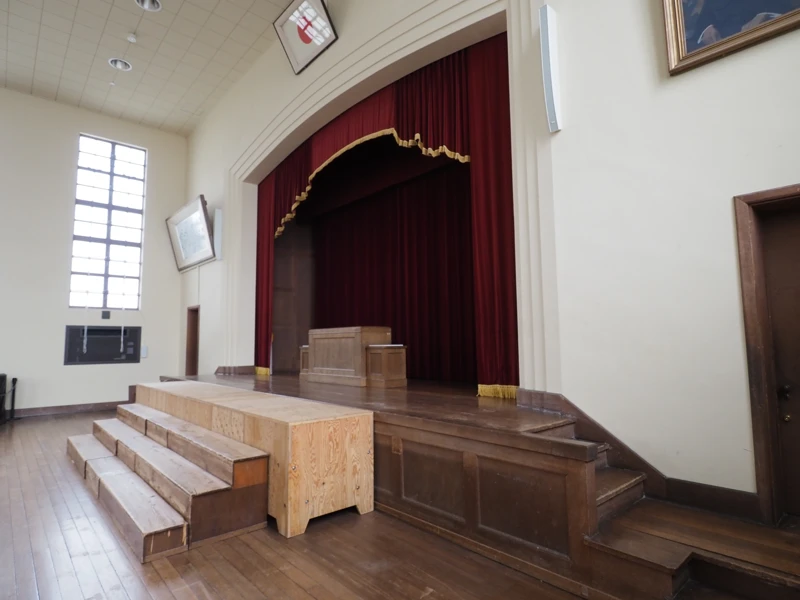
Toyosato Elementary School Song.

I felt like I’d seen the name Fujikawa Sukezo, who created the school song, somewhere before. He was the chief editor of the “History of Toyosato Village” published in 1963.
The school building was completed, and the dedication ceremony was held on May 30, 1937. Since he also composed the dedication ceremony song sung at the ceremony, it’s probably the same person.
I step onto the stage and survey the auditorium.
The upper gallery is visible at the back.
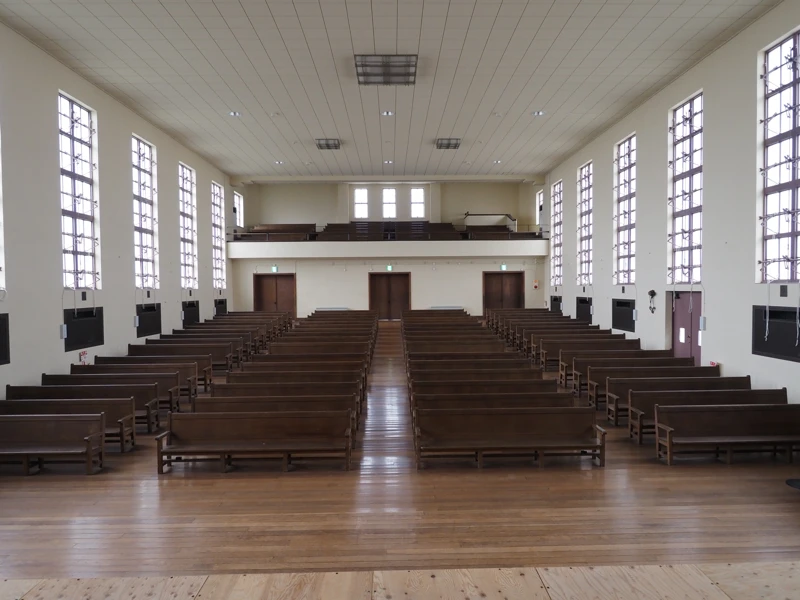
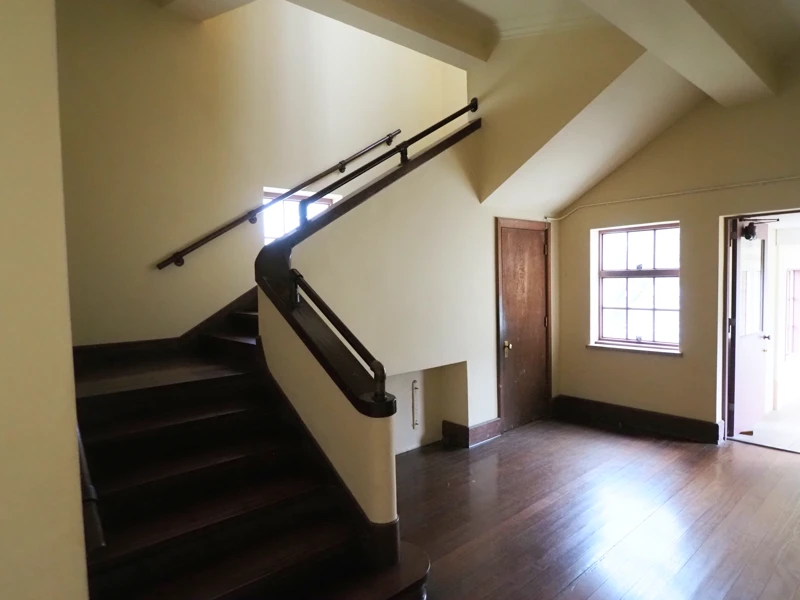
To reach the second-floor seating, we had to exit the auditorium and climb the stairs in the hallway.
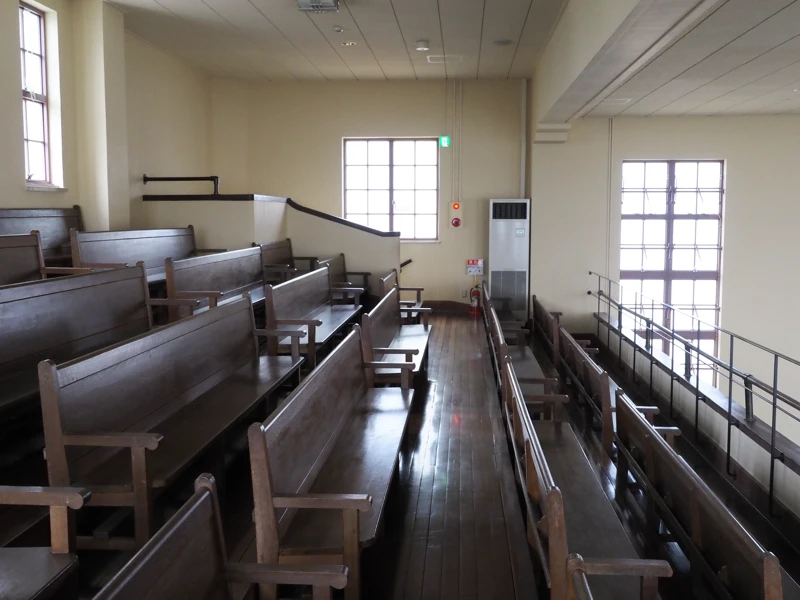
The chairs in the second-floor seating were arranged in like stairs.
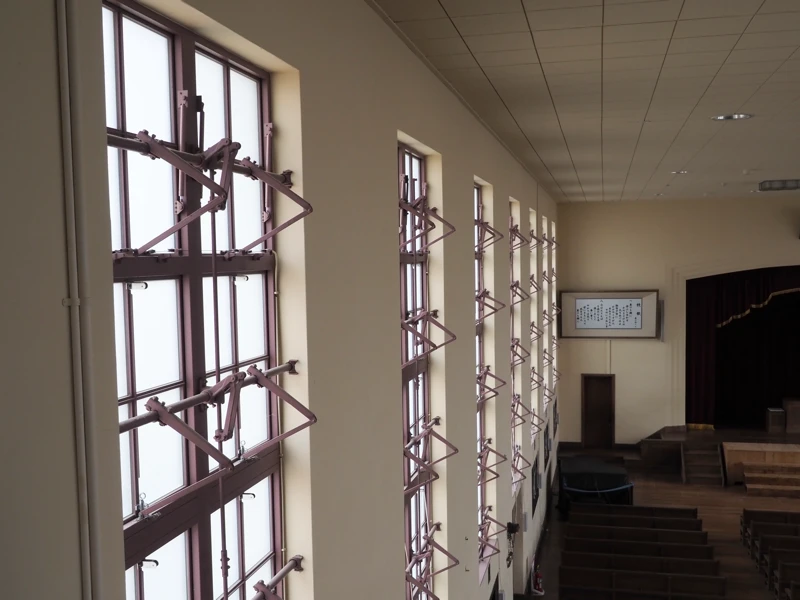
I think the windows will be open and close from the bottom, the mechanical opening mechanism is interesting.
I hear they repaired part of the opening mechanism so it can be used again.
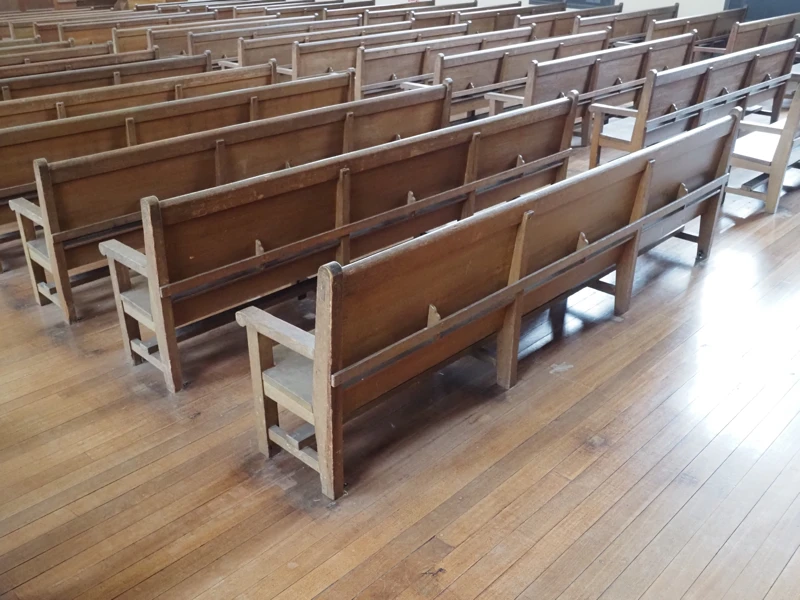
Back downstairs. The backs of the wooden chairs have space for small items.
That concludes the tour of the auditorium. Finally, I opened the door and took a photo from the entrance hall.
Next, let’s head to the former Shutoku Memorial Library.
(To be continued.)
[Reference] (written in Japanese)
“Renovation, Preservation and Restoration, Seismic Retrofit” (Ichiryusha Vories Architects Website)