La Collina Omihachiman
The Taneya Group, which manufactures and sells Japanese and Western sweets in Omihachiman City, opened a commercial facility in 2015 that houses its main shop, manufacturing plant, farm, and more.
The location is right near the Tucker House, designed by W. M. Vories.
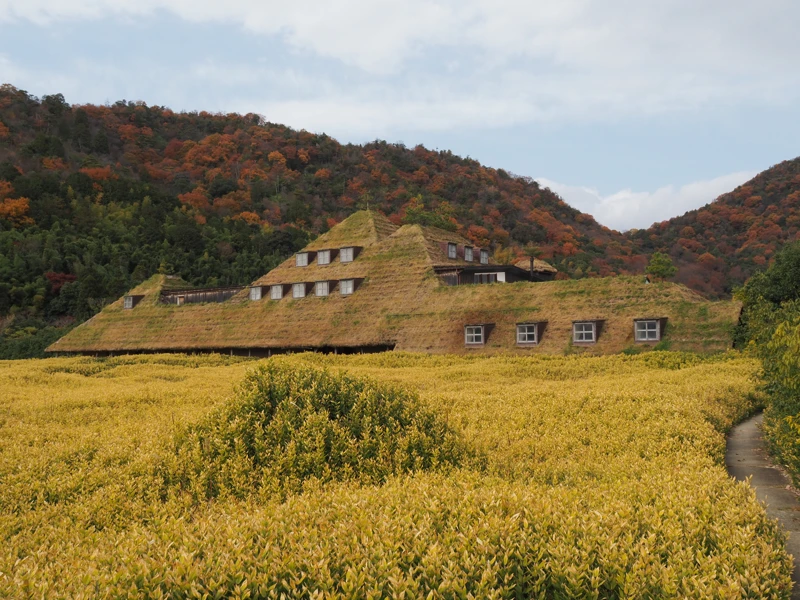
Parking my car and walking over, I was greeted by a building with a grass roof. Visiting in December, it was yellow, but in summer the green must be more vivid. This building is the main shop, simply named “Kusayane (Grass Roof)”
It was designed by Fujimori Terunobu.
La Collina apparently means 'hill’ in Italian. Taneya reportedly commissioned Mr Fujimori to create a facility inspired by hills and terraced fields.
Mr. Fujimori had an interest in thatched roofs and had long wanted to create a building entirely wrapped in grass. That desire apparently took the form of this grass roof. (From an interview video)
Shortly before visiting Omihachiman, I happened to visit the Jomon-style dwelling “Furusugian” (Chino City, Nagano Prefecture) designed by Mr. Fujimori and attended his lecture on grass and earth roofs in Japan and North Europe.
This background made the design intent of this building easier for me to grasp.
Mr. Fujimori believes the relationship between architecture and nature is crucial. However, for a building of this scale, wood construction is impractical, so the structural framework must be made of steel and concrete. His approach was to use modern technology to create the skeleton and then skillfully clothe it with nature.
Pine trees are planted at the top of the roof, but it seems they tried various trees and many died, resulting in quite a few failures. They maintain it continuously, but it appears to be quite labor-intensive.
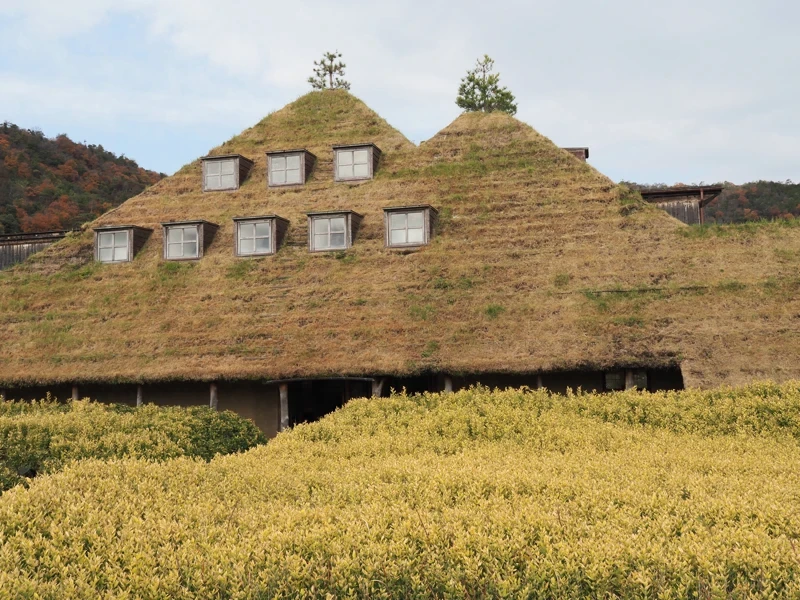
Under the eaves of the grass roof.
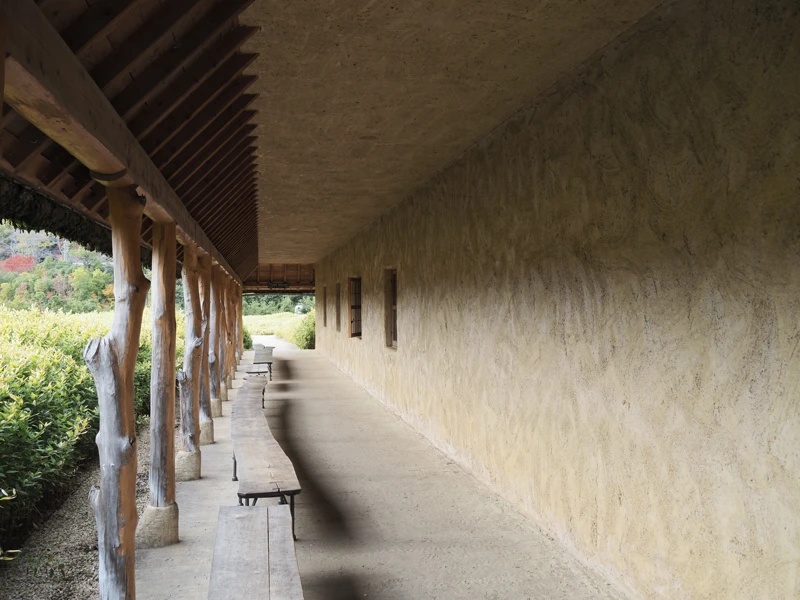
The soil wall was plasterd in a workshop format with participation from employees and university students. About 80 people participated, I hear.
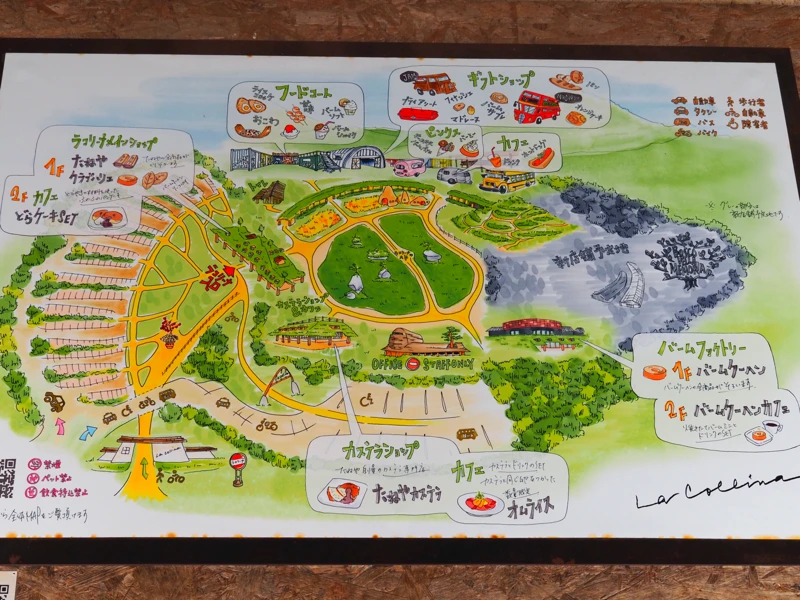
A facility map was posted near the entrance. The left side of the map shows the parking lot, with a grass roof located about one-third of the way in from the left. The central plaza to its right is farmland. The west side of the farmland (top in the map) is enclosed by a corridor, with a food court and shops lining the outer perimeter.
To the east of the farmland are a cafe, offices, and a manufacturing plant.
The gray area on the right side of the map was labeled as the planned site for a new store.
Passing through the main shop, we emerged into the central plaza. The building facing the square, which looks like it could be in an anime, is an office building and not open to tourists. However, the round tower-like section is an observation deck, and you can apparently climb up there by booking a paid tour. (The fee for the Baumkuchen Factory and the observation deck is apparently 4,400 yen…)
The structure at the far left is the Baumkuchen Factory. Seen from above, it looks like a giant Baumkuchen is perched on top of the building.
The farmland in the foreground appears to be rice paddies.

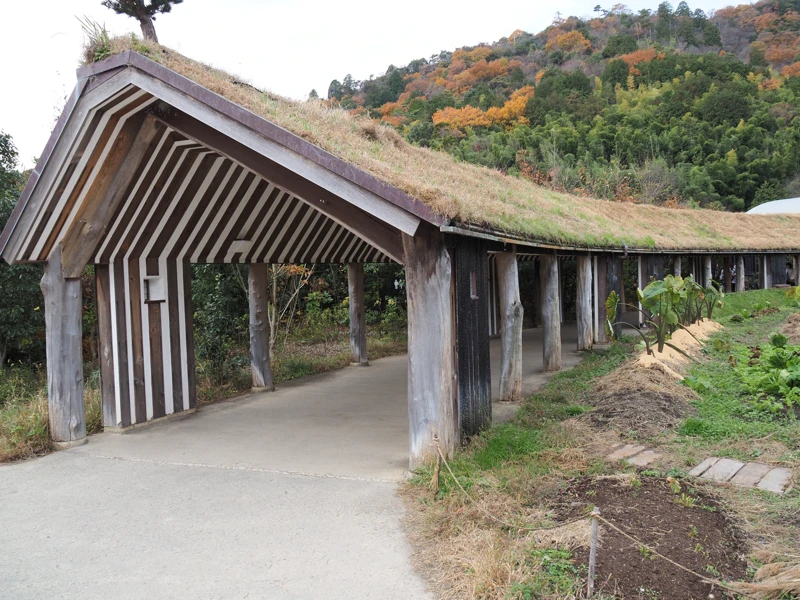
The western corridor of the farmland. Farming work was underway in the field on the right even on this day.
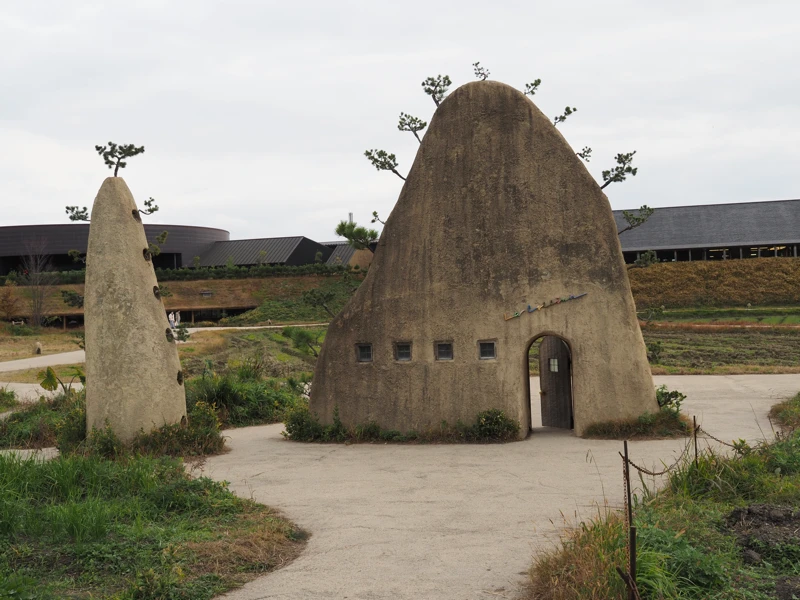
In the path between the farm plots stood some objects like a house from a fairy tale. The door was small enough that only a child could pass through.
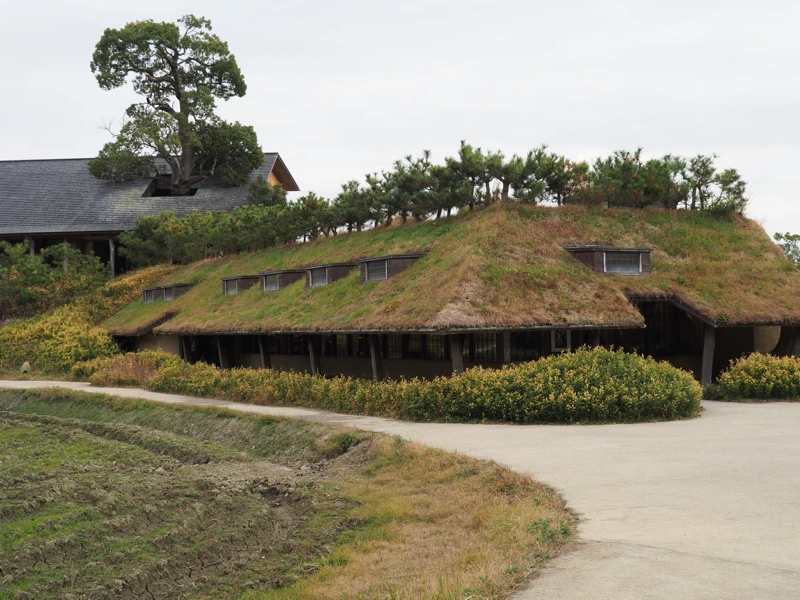
This building houses a shop and cafe. I didn’t see inside.
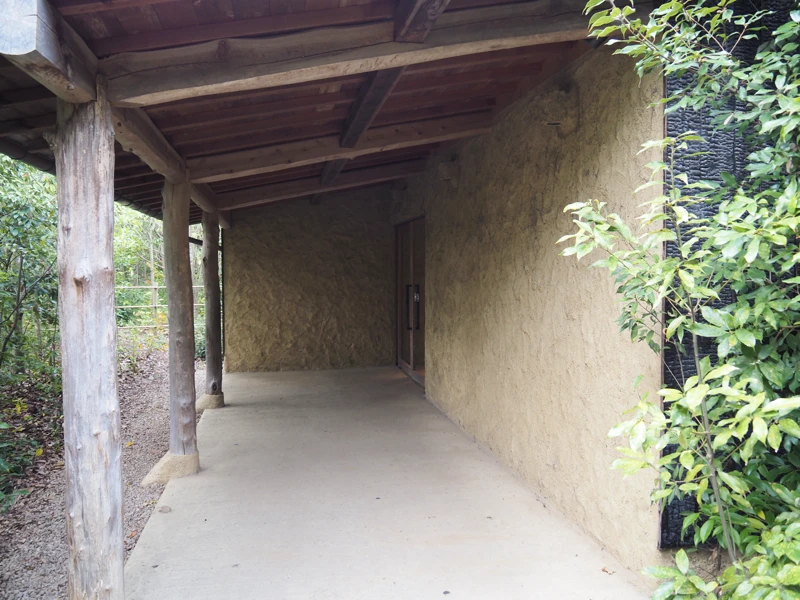
This is the restroom.
I didn’t know what this was during my visit. According to the facility’s website, the Taneya Group mows reeds here annually. The cut reeds are dried and used as material for making torches for the facility’s autumn event, “Omi Festival Torchlight”
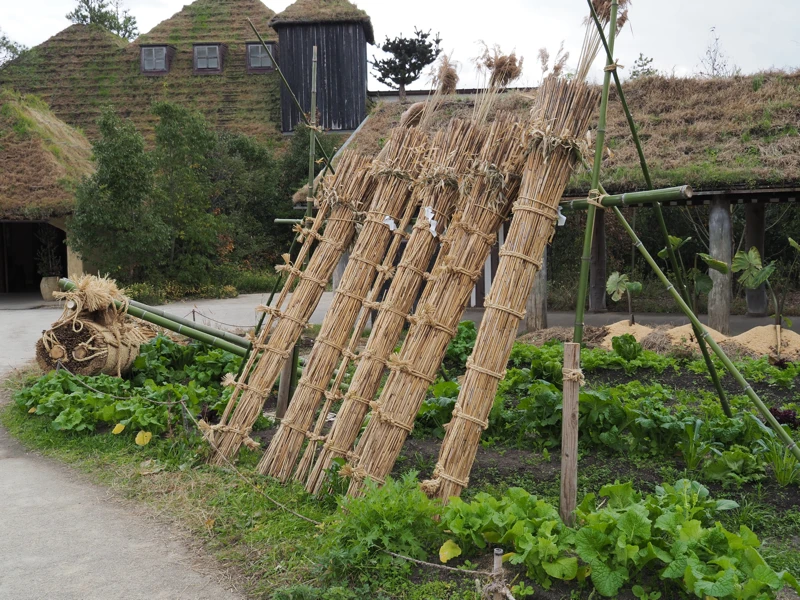
At the actual festival, torches made by the city’s settlements are offered at local shrines from March to May. Each district has torches of various shapes; the ones in the photo above were identified as Minamitsuda district’s “Hiki-taimatsu (Dragged Torch)” and “Furi-taimatsu (Swinging Torch)”
A torch also stood on the west side of the grass roof; this one was Oda district’s “Kasa-taimatsu (Bamboo Hat Torch)”.
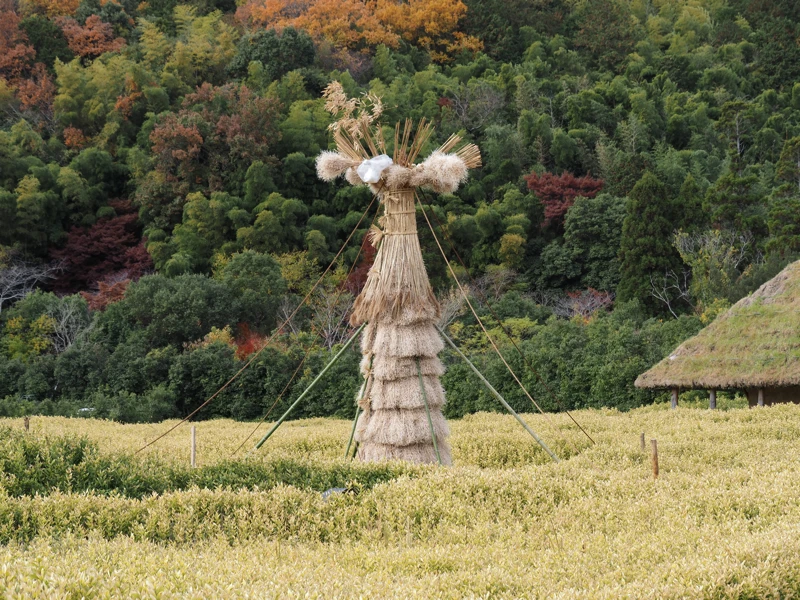
To preserve Omihachiman’s traditional events, they make and display these torches here as part of an event. I heard they displayed five types of torches in total, but since the display was scheduled to run until around mid-December, I assume they’re no longer there now.
I bought some sweets at the main shop and finished my tour.
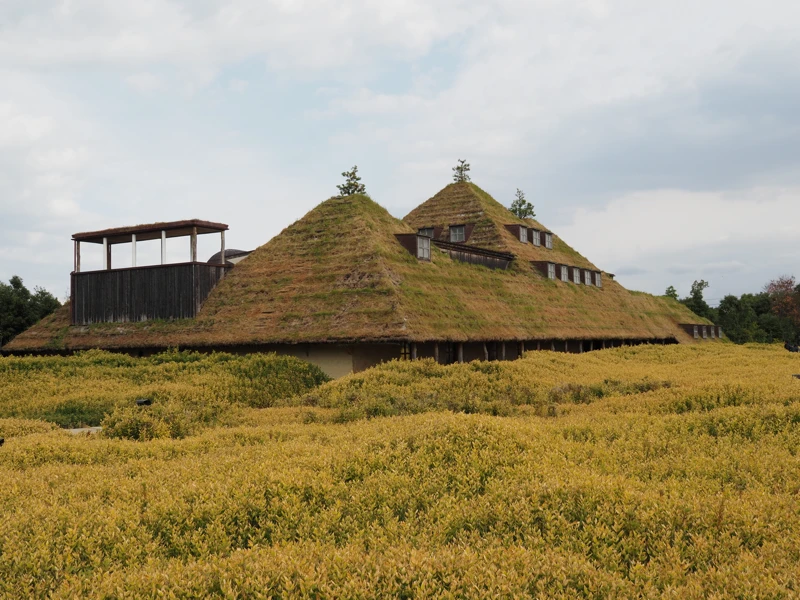
There’s also a spot resembling an observation deck on the west side of the grass roof. We can probably go up there. If I get another chance to visit, I’d like to see the lush green scenery of summer.
[Reference] (written and told in Japanese)
“Fujimori Terunobu: Interview on Receiving the Japan Art Academy Prize” Taneya CLUB HARIE (YouTube / June 21, 2020)
“Omi Festival Torches – Part 1” (La Collina Diary / Published on La Collina Website / November 27, 2025)
[Related article]
“Visiting 'Furusugi-an'" (2025-12-01)