Former Ibaraki Kaikan (Ibaraki Hall)
This is the Ibaraki kaikan (Ibaraki Hall) building.
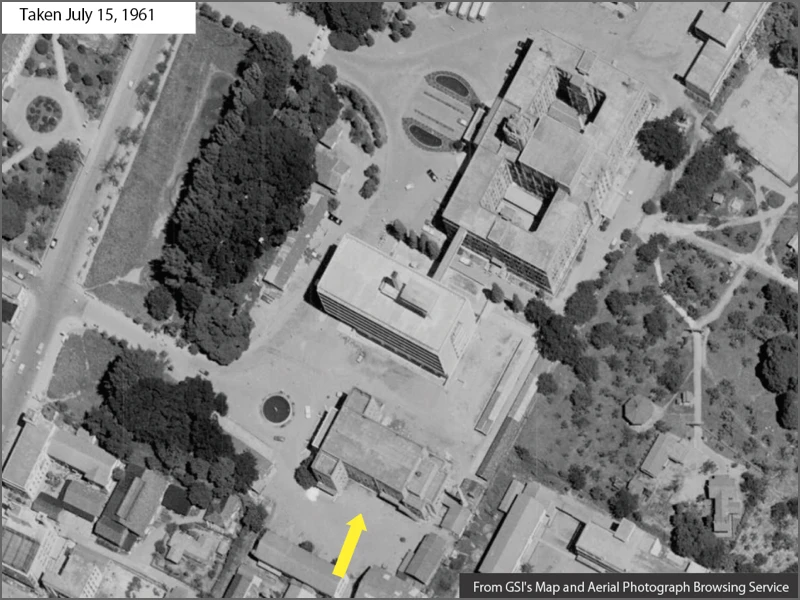
Currently, the Ibaraki Prefectural Library stands south of the Ibaraki Prefectural Government Sannomaru Office Building, but this building once stood on that very spot.
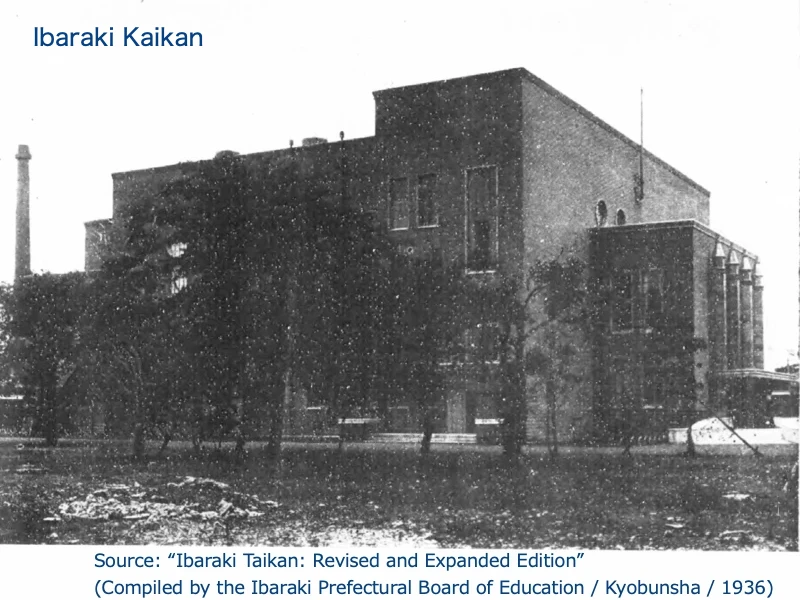
In the early Showa period, the Ibaraki Prefectural Exhibition Hall, built in 1914 in Mito City’s Sannomaru area, served as the prefecture’s public hall. Its second-floor hall was used for public gatherings.
However, it was destroyed by fire on May 7, 1929. At the time, the Ibaraki Art Exhibition was being held there, and many of the works were also lost in the fire.
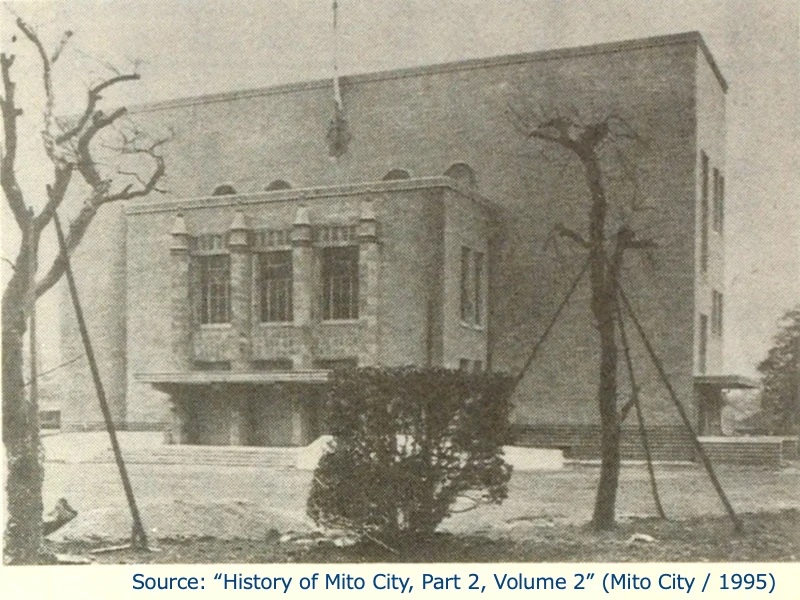
Therefore, it was decided to build this hall south of the prefectural government building. Construction was approved by the Prefectural Assembly in December 1931. Work began in November 1933 and was completed in April 1935. The three-story reinforced concrete building housed a cafeteria, meeting rooms, a VIP room, the Prefectural Education Association office, and the Education Association library on the first floor. The second floor contained the main hall.
The front view of the building is clearly shown in this photograph. (Quoted from “Mito City History, Part 2, Volume 2”)
Diagrams included in records of events held at the time provides insight into the interior layout.
This shows the first floor. A review ceremony for the Ibaraki Prefecture Branch of the Fire Association was held here in 1937, and this diagram appeared in the event records. (As member of the Imperial Family attended, detailed records were compiled even during the preparatory stages.)
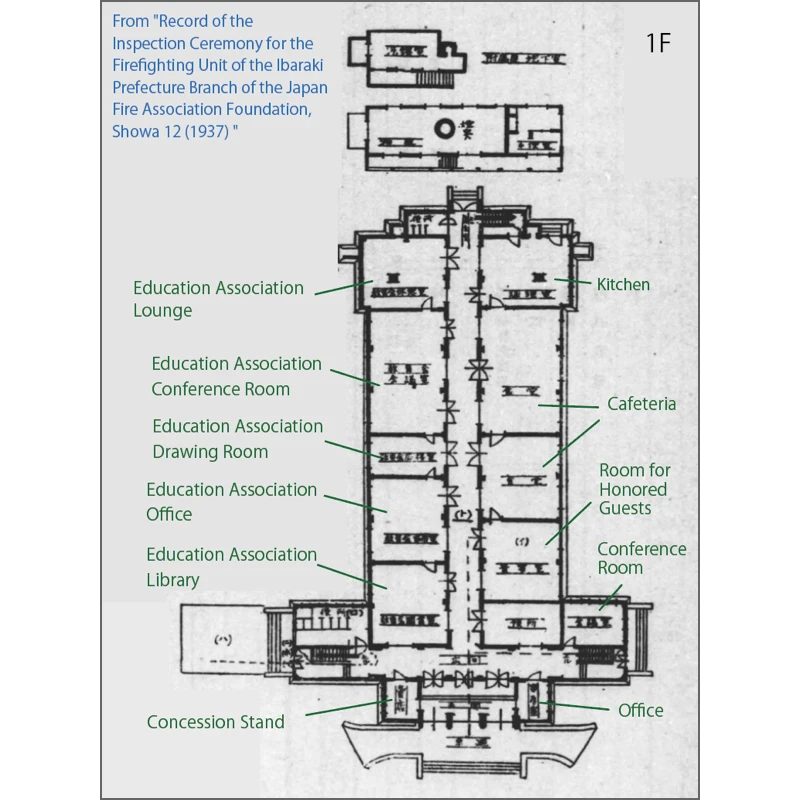
As shown, the Education Association occupied most of the first-floor space, so this hall also served as the association’s headquarters. Consequently, it was sometimes called the Ibaraki Prefecture Education Association Hall.
The total construction cost was approximately ¥240,000. Of this, ¥150,000 was covered by donations: ¥50,000 from Mito City and contributions from various organizations. Reportedly, most of these donations came from teachers within the prefecture.
I found the second-floor plan in a separate document.
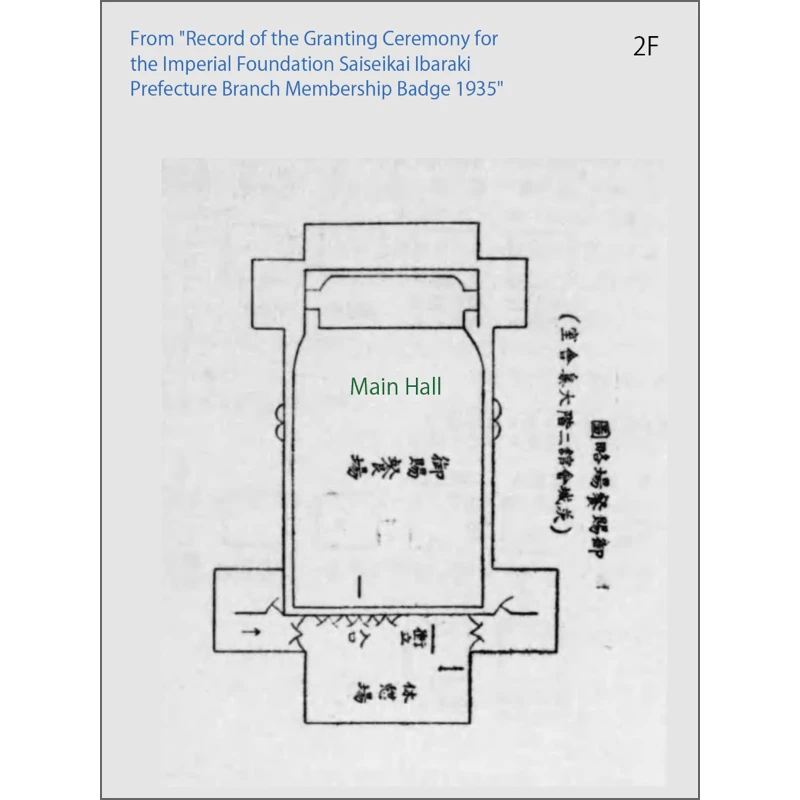
The main hall reportedly had a total seating capacity of 1,134 seats, including 362 seats on the third floor.
However, 1935, the year this hall was built, was a time when wartime education was intensifying. The hall began hosting not only general events like art exhibitions and gatherings, but also displays and assemblies aimed at boosting war morale. It held meetings of the Imperial Rule Assistance Association, collective funerals for war dead (held not only here but elsewhere), and send-off ceremony for Japanese colonists of Manchuria.
During the Mito air raid on August 2, 1945, the Ibaraki Kaikan suffered extensive damage, with its main hall and interior areas burned down.
Immediately after the war ended, since all movie theaters and performance halls had suffered damage, the Ibaraki Kaikan was repaired and used for various events. Records indicate that in December 1945, Mito City hosted a theatrical performance to cheer up war damage people.
After restoration work was completed in 1949, the main hall was widely used for performing arts, various assemblies, exhibitions, and coming-of-age ceremonies.
The hall remained in use for about 20 years after the war, but it closed in 1966 when the Ibaraki Prefectural Citizens’ Center opened, and was demolished in January 1969.
An aerial photograph show its appearance before demolition. The building indicated by the arrow is the Ibaraki Kaikan.
After demolition, the Prefectural Assembly Hall was built on the site in 1970.
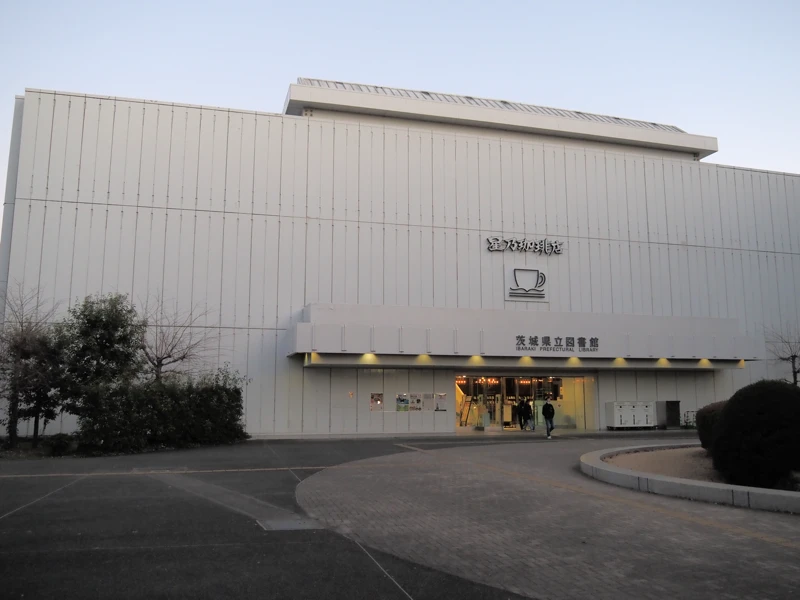
Then the Prefectural Assembly Hall relocated in 1999, so the building was renovated and opened as the Ibaraki Prefectural Library in 2001.
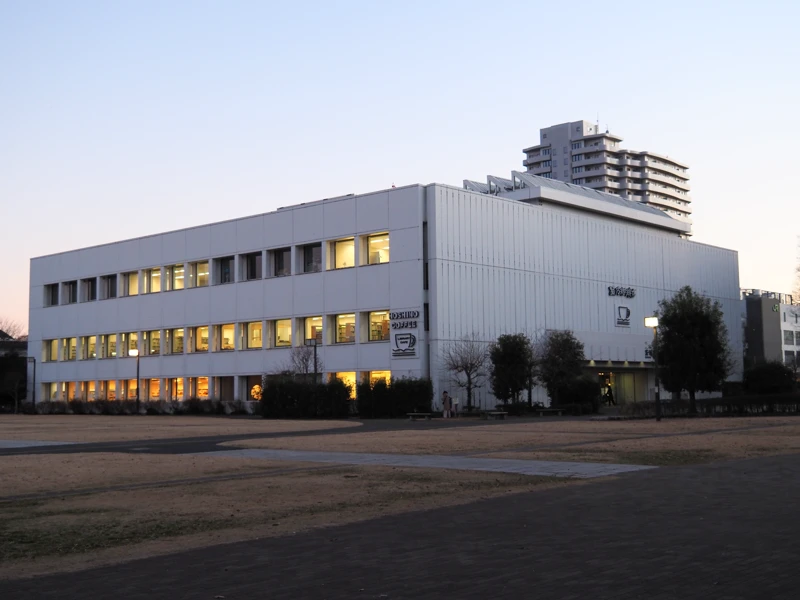
Still, I wonder why the coffee shop sign is bigger than the library sign.
[Reference] (All written in Japanese)
"The Encyclopedia of Ibaraki Prefecture" (Ibaraki Shimbun ed. / Ibaraki Shimbun / 1981)
"Chronology of Modern and Contemporary Mito City" (Compiled by the Modern and Contemporary History Special Committee of the Mito City History Compilation Committee / Mito City / 1991)
“History of Mito City, Part 2, Volume 2” (Compiled by the Modern and Contemporary History Special Committee of the Mito City History Compilation Committee / Mito City / 1995)