Omihachiman and W. M. Vories (2)
(Continued)
I participated in a guided tour introducing Vories architecture.
Next up is Vories Gakuen.
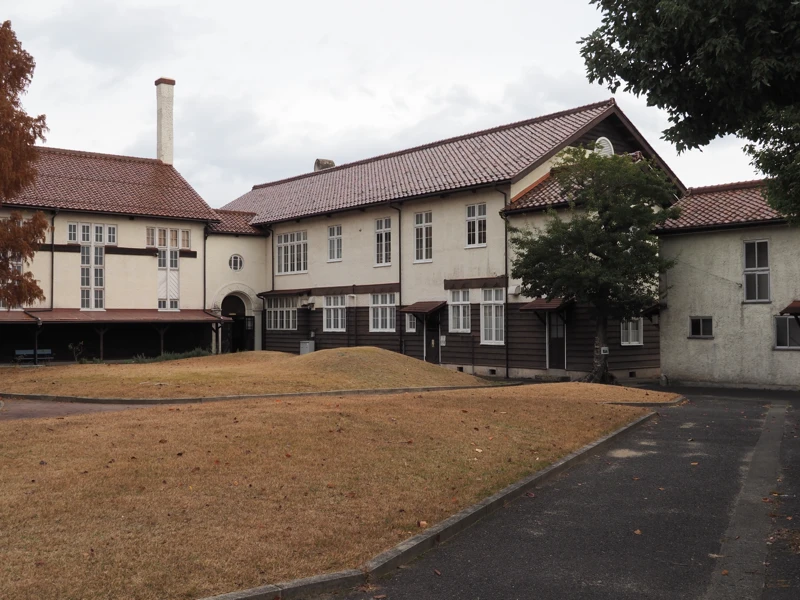
The building in the photo features the Hyde Memorial Hall in the center and the Education Hall on the left. Both were designed by Vories and constructed in 1931.
This school traces its origins to the Seiyu-en Kindergarten, established in 1922 by Vories’s wife, Hitotsuyanagi Makiko. In 1947, the Omi Kyodaisha Elementary and Junior High Schools were founded, followed by the Omi Kyodaisha High School the next year. It was renamed the Vories Gakuen Educational Foundation in 2015.
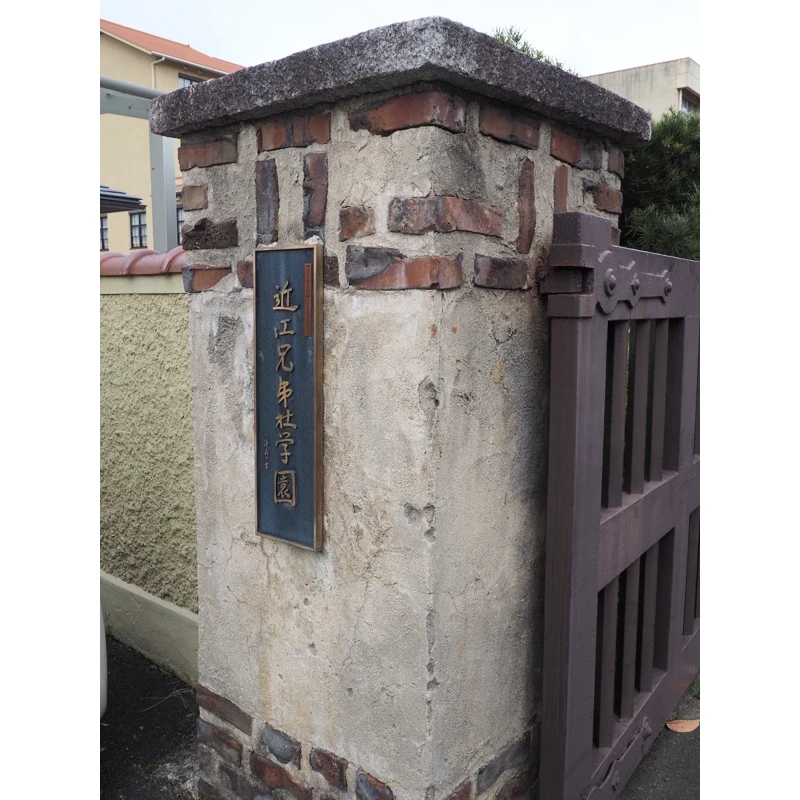
The gate pillar on the right bears the Vories Gakuen nameplate, while the left pillar displays the Omi Kyodaisha gakuen nameplate.
The Hyde Memorial Hall was originally built as the main building of Seiyu-en Kindergarten. It is now called the Hyde Memorial Hall because it was constructed with a donation from the American businessman Mr. Hyde.
Until March 2003, it was used as the Omi Kyodaisha Kindergarten building.
The entrance of the Hyde Memorial Hall.
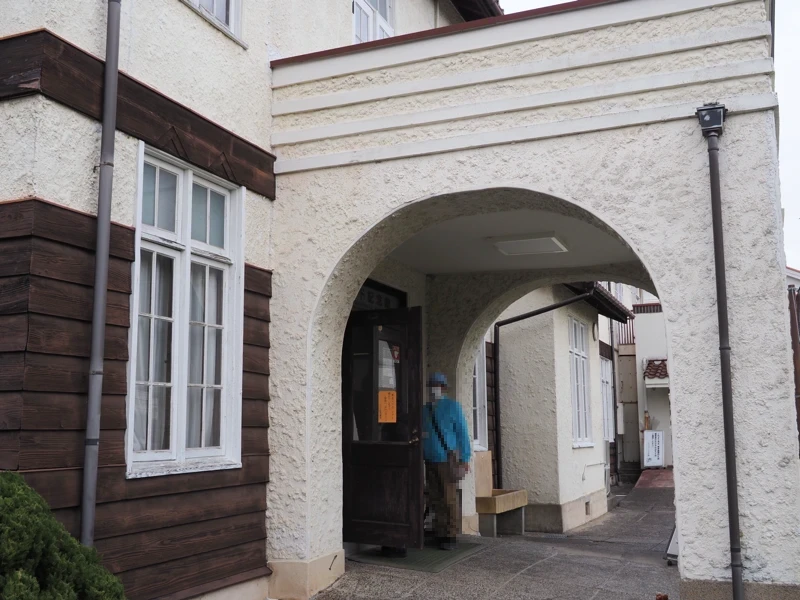
Inside, items related to the founder and informational panels are displayed. It is open to the public for a fee.
The adjacent Education Hall was built as the gymnasium for Seiyu-en.
Its interior was also open for viewing.
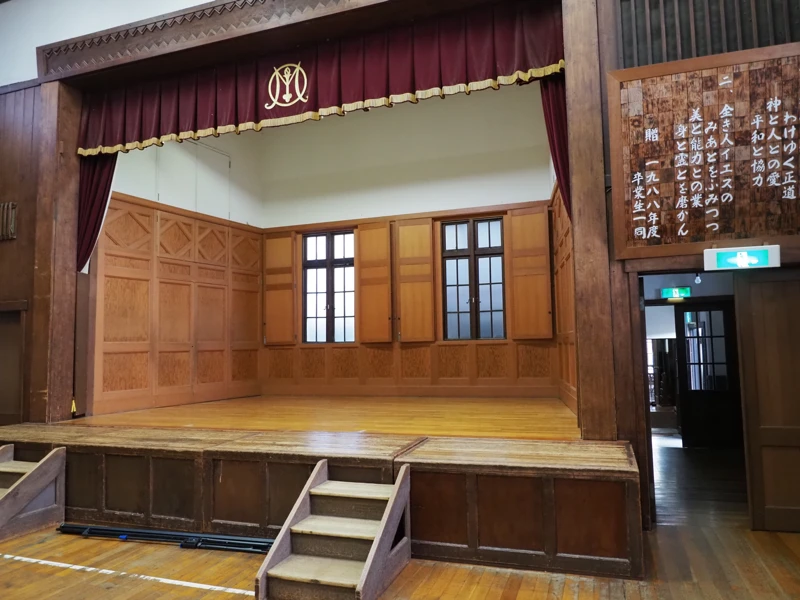
Both buildings were registered as National Registered Tangible Cultural Properties in 2000.
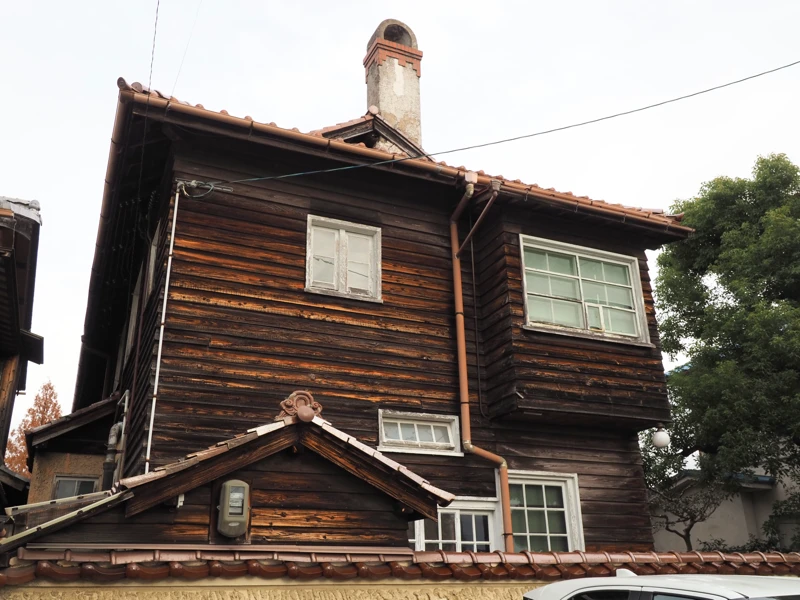
The next building is located right next to the Vories Gakuen. It is the former Vories residence, built in 1931.

Originally planned as a dormitory for kindergarten teachers, it was reportedly changed to a private residence during construction. It is now used as the Omi Kyodaisha Hitotsuyanagi Memorial Hall (Vories Memorial Hall).
It displays Vories’s personal belongings and materials, but reservations are required for tours.
The following photo shows the Andrews Memorial Hall.
In the previous article, I mentioned the Hachiman YMCA Hall built in 1907, and it was rebuilt in 1935. This is that building rebuilt.
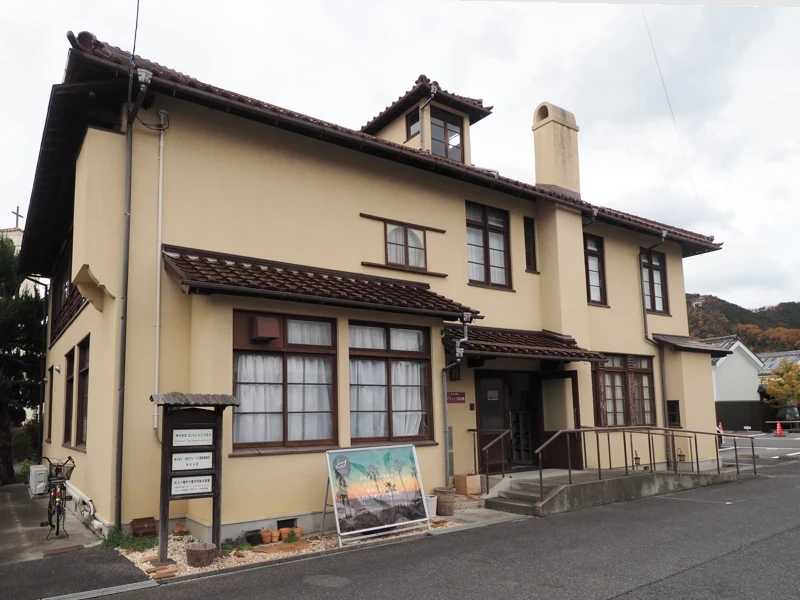
The on-site information board states, “In 1935, the building was relocated 12 meters from its original position to its current site.” Perhaps because of this, several websites describe the current building as Meiji-era architecture. The old and new buildings differ in form, so it would be more accurate to describe this as a reconstruction or rebuilding utilizing materials from the old structure rather than a relocation. The reason for rebuilding was damage sustained during the 1934 Muroto Typhoon.
Andrews refers to Herbert Andrews, a close friend from Vories’s university days who died young. The original Hachiman YMCA Hall was built using donations from the Andrews family, hence the name, which was carried over to the current building.
It was registered as a Tangible Cultural Property in 2009.
In 1941, as Japan and the United States grew increasingly hostile and many foreigners left Japan, Vories acquired Japanese citizenship and changed his name to Hitotsuyanagi Merrell, adopting his wife’s surname. The Vories Architectural Office was also renamed the Hitotsuyanagi Architectural Office.
The Hitotsuyanagi Architectural Office dissolved in 1944 due to wartime restrictions. The architectural practice was revived after the war in 1946 as the architectural division within Omi Brotherhood Ltd.
In 1961, the architectural division became independent, establishing Ichiryusha Vories Architects, which continues its activities today.
The next building is the Omihachiman City Museum, which was redesigned and rebuilt by Vories after the World War II.
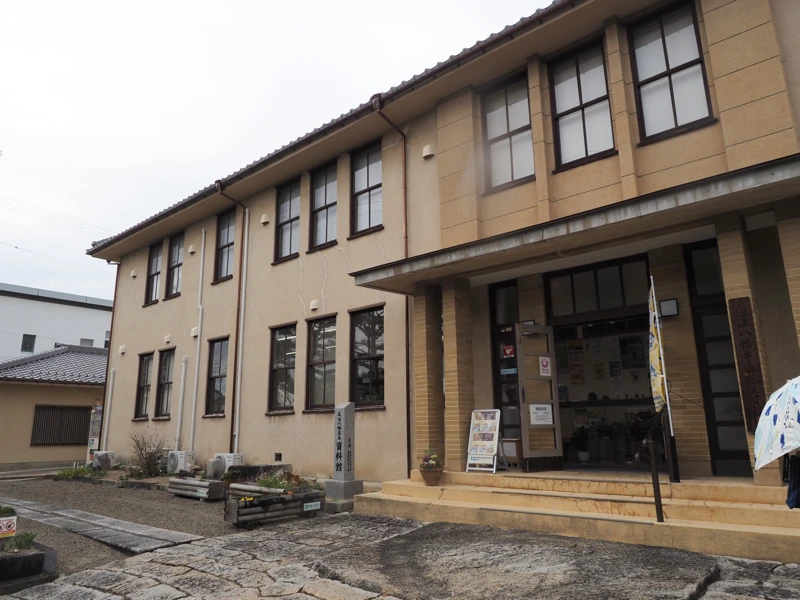
Originally built in 1886 as the Hachiman Police Station, it underwent major reconstruction in 1953, though I couldn’t find any photos of it before the renovation.
Up to this point, I’ve written in chronological order of the buildings’ construction dates, not the guided tour sequence. The tour concluded at Hakunkan. (This is not a building designed by Vories.)
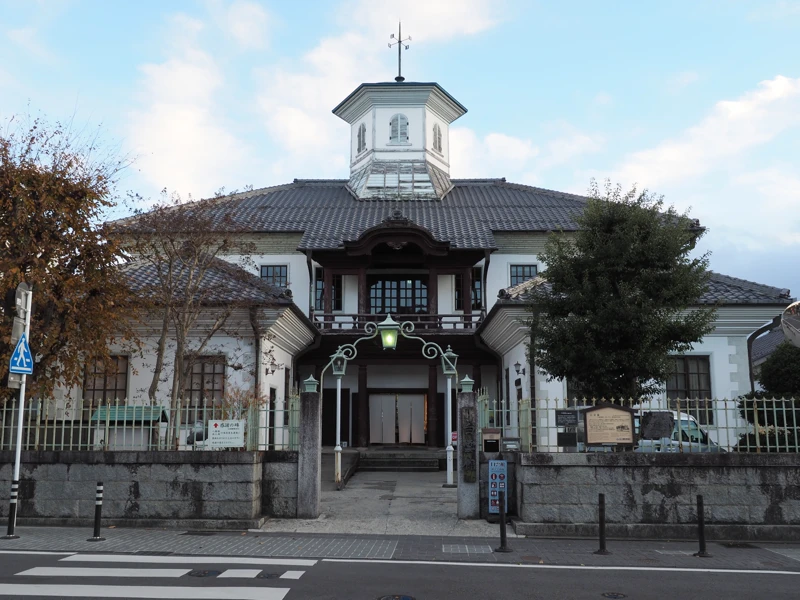
This building was constructed in 1877 as Hachiman-higashi School. It is now used as a tourist information center and civic gallery.
[References] (All written in Japanese)
“The Works of the Vories Architectural Office: Their Work in Japan 1908-1936” (Authored by the Vories Architectural Office, Edited by Nakamura Katsuya / Jonan Shoin / 1937)
“Japanese Architecture: Meiji, Taisho, Showa, Vol. 6” (by Yamaguchi Hiroshi / Sanseido / 1979)
“Guidebook to Modern Architecture: Kansai Edition” (by Ishida Junichiro et al. / Kashima Publishing / 1984)
“W. Merrell Vories (Hitotsuyanagi Merell): Building ‘God’s Kingdom’ in Omi” (Okumura Naohiko / Omi Brotherhood, Kosei-sha / 1986)
“Street Corner Renaissance: Western Architecture Alive in the Lake Country (Omi Bunka Sosho; 24)” (Masuda Koichi, ed. / Sunbright Publishing / 1986)
“Vories’ Architecture: Mission Utopia and the Flower of the City” (by Yamagata Masaaki / Sogensha / 1989)
“Shiga Prefecture Modern Architecture Survey Report” (edited by Shiga Prefectural Board of Education, Cultural Properties Protection Division / Shiga Prefectural Board of Education / 1990)