Former Ibaraki Prefectural Office Building
This building was constructed in 1930 as the Ibaraki Prefectural Office. It is now known as the Sannomaru Government Building and houses various prefectural agencies and organizations.
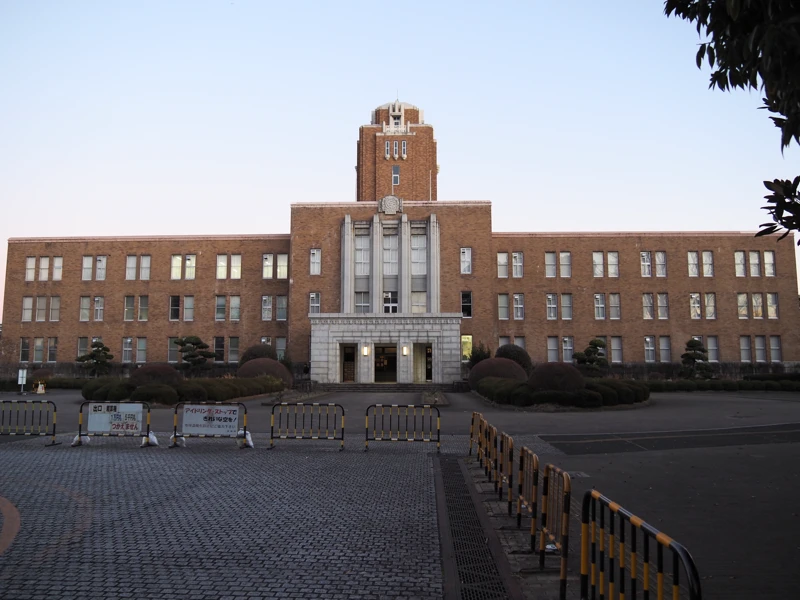
I visited in the morning, the front was backlit and dark, so only the first photo was taken in the evening. The other photos were taken during the morning.
Although it was a holiday, the entrance was open. I informed the reception desk that I wished to tour the building, and they kindly granted me access.
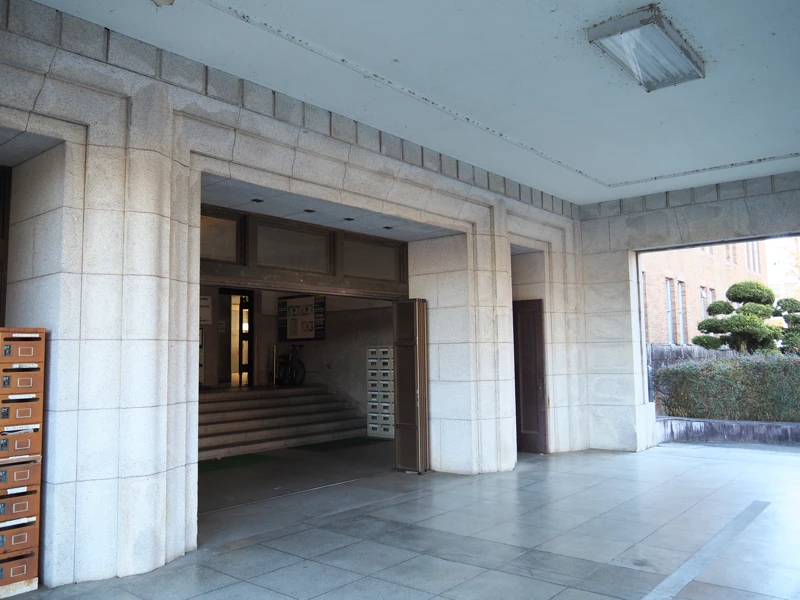
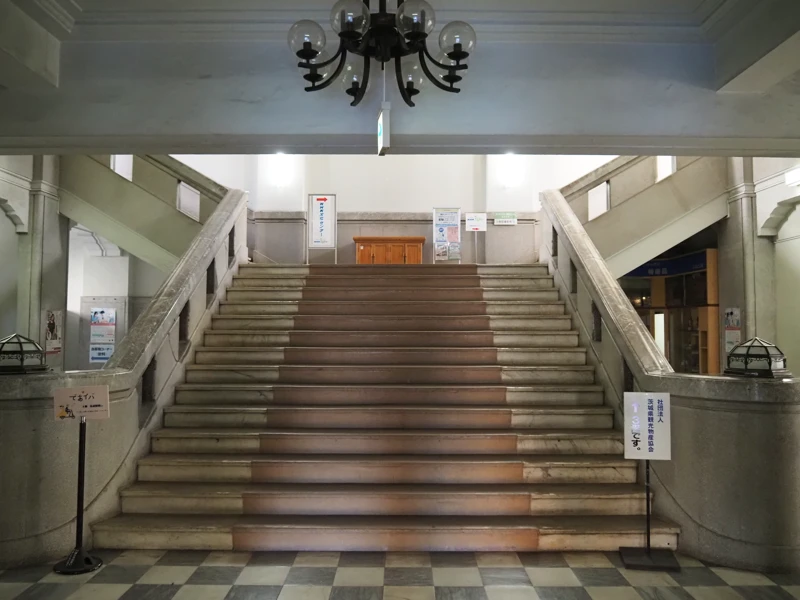
Passing through the entrance, stairs are located directly ahead in the hall.
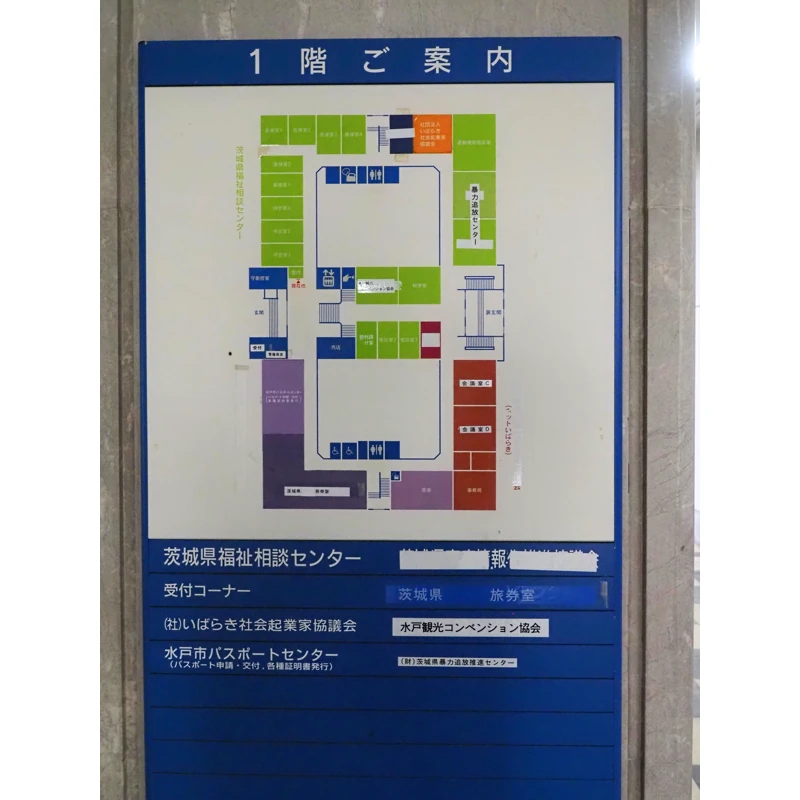
A building guide map is displayed.
The office building has a shape formed by connecting two squares. On this map, the left side is the main entrance, and the right side is the rear entrance.
It is a three-story above-ground, one-story below-ground structure. Access is restricted, but it features a tower.
This building was constructed as the new prefectural office building due to the deterioration of the Meiji-era prefectural office. Construction began in April 1929. It was designed by Akira Oshio (1881-1968) and built by Takenaka Corporation.
The year 1929 (Showa 4) saw the onset of the Great Depression in October. However, delaying construction was not an option. It had already been decided that the new prefectural office building would house the Imperial Headquarters and the Emperor’s temporary residence during the Army Special Grand Maneuvers to be held in Ibaraki Prefecture that November. Construction proceeded at a rapid pace.
Here is the confirmation items from the General Staff Office to the Prefecture.
“Summary of Oral Explanation Regarding Administrative Department Matters for the Showa 4 Special Grand Maneuvers, April 1929
(omitted)
(3) As the Imperial Headquarters for the maneuvers is designated for Mito City, the Inspectorate Headquarters shall also be established within the same city.
The Imperial Headquarters is scheduled to occupy your prefecture’s newly constructed prefectural office building. The General Staff Headquarters is scheduled to use a certain school within Mito City. While every effort should be made to shorten this period, preparations for facilities and removal are expected to require over two weeks. We request your advance consideration regarding any resulting disruption to education and other matters."
(From “Record of the Imperial Army Special Grand Maneuvers and Imperial Visit to Ibaraki Prefecture, Showa 4”)
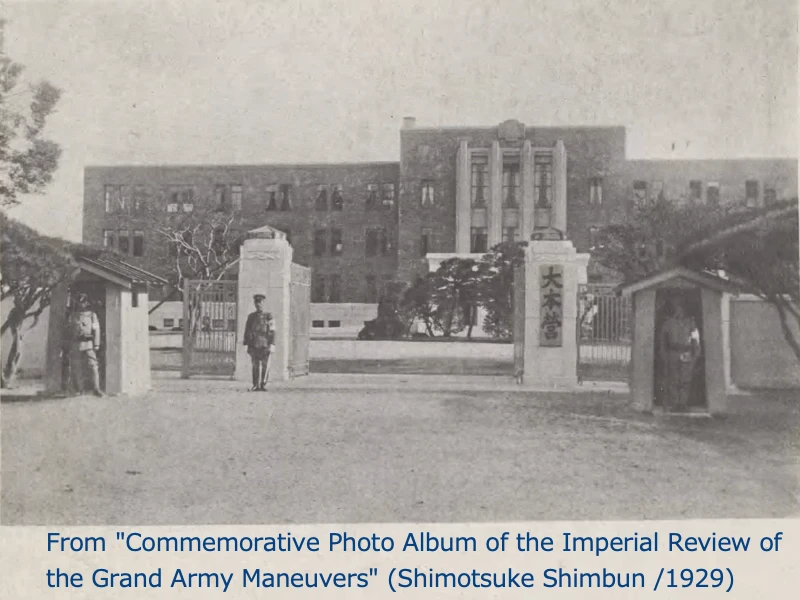
However, the prefecture understood that everything could not be completed within this short period. They planned to divide the construction period into two phases, prioritizing essential sections. Working day and night, they managed to finish ahead of schedule, though the tower remained unfinished. Photographs from that time show the prefectural office building without the tower.
The entire building, including the tower, was completed the following year, on May 5, 1930.
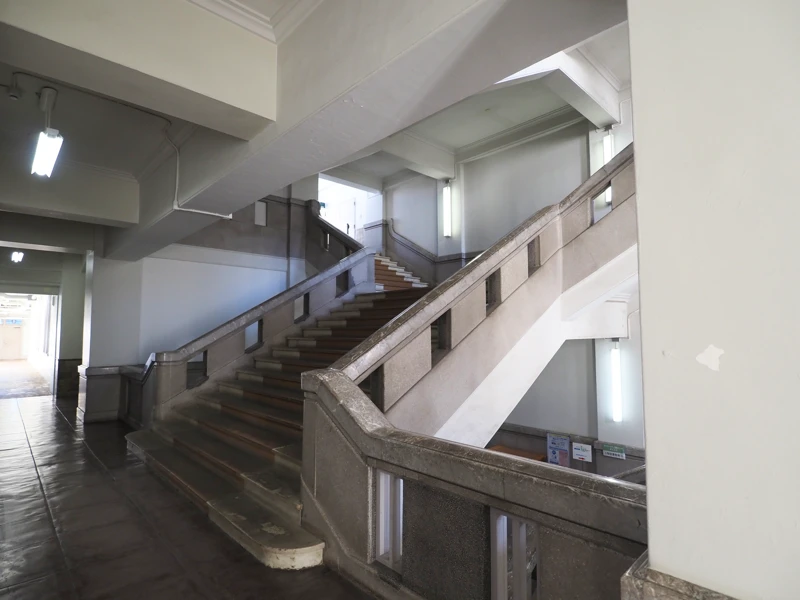
Climbed the stairs and walked around the corridor.
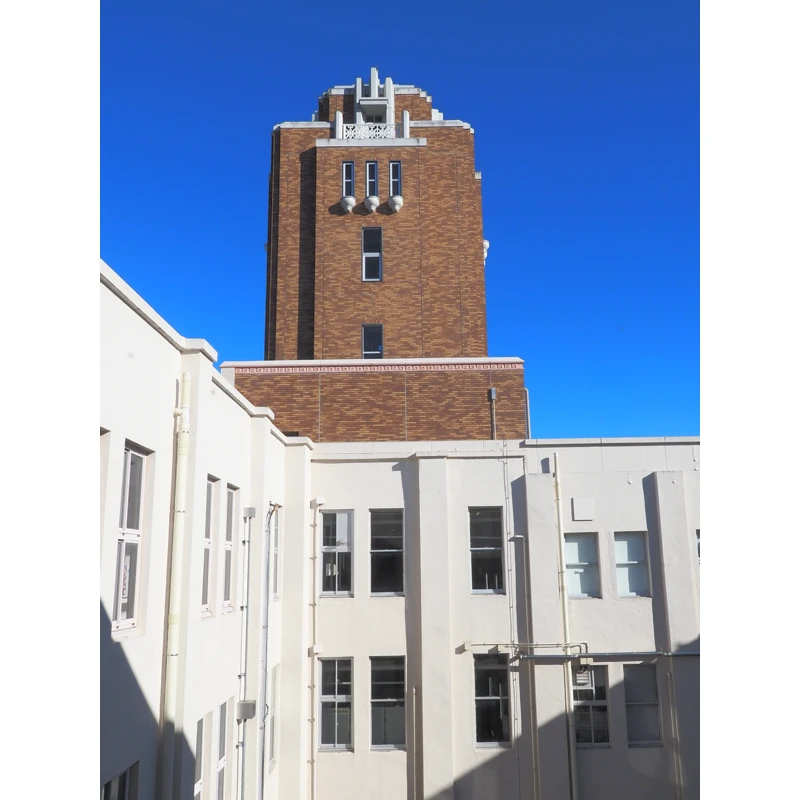
The tower can be seen from the window.
This is the rear entrance on the east side.
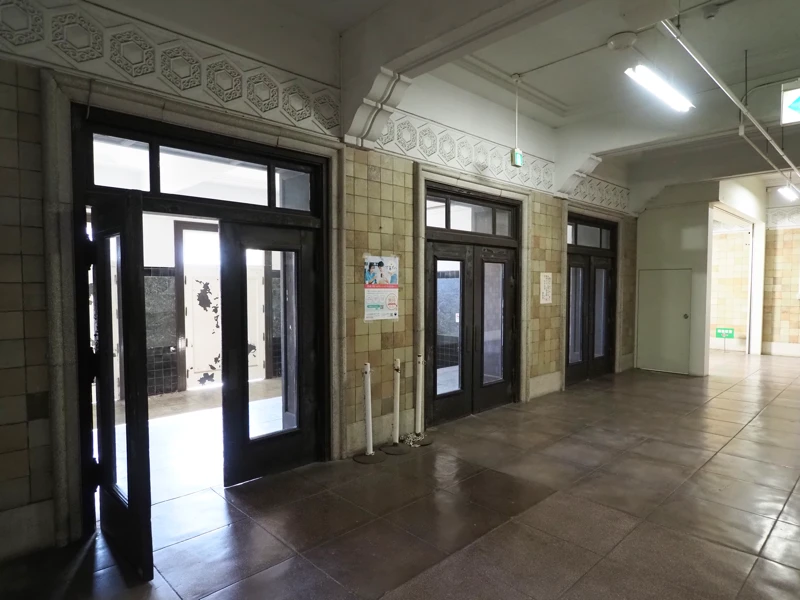
The hallway walls were brownish, but the back entrance walls had a bluish tint. It felt a bit different and left an impression.
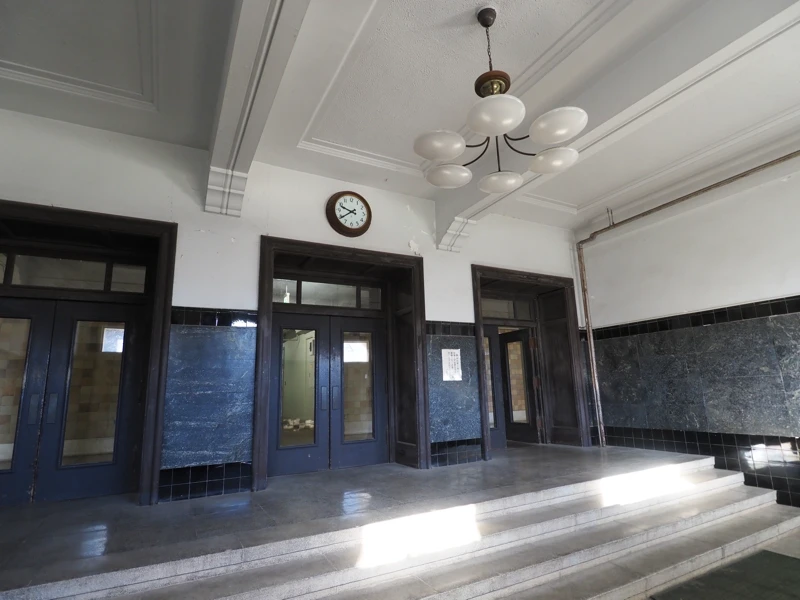
Since it was a holiday, there were hardly any people around. I walked alone through the hallways on each floor and returned to the main entrance.
I thanked the receptionist and went outside.
The south side of the government building.
Although it has since been removed, an addition was built in 1954, making it a four-story building thereafter.
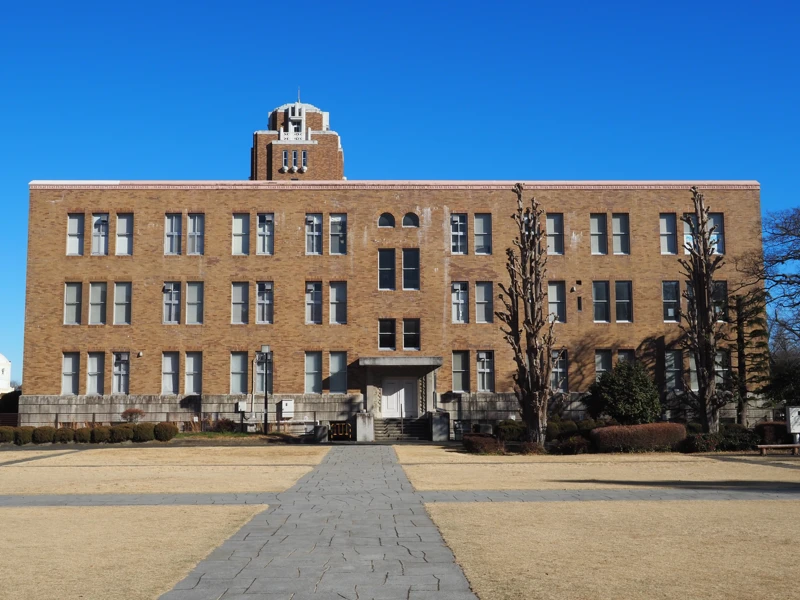
In 1999, a new government building was completed and the prefectural government relocated. A closing ceremony was held on April 7th.
Plans were made to demolish this building, but it was instead repurposed as the Sannomaru Government Building. A parking lot was constructed on the site where the old prefectural police headquarters and annex buildings had been demolished, and it reopened in January 2000.
This is the rear entrance on the east side.
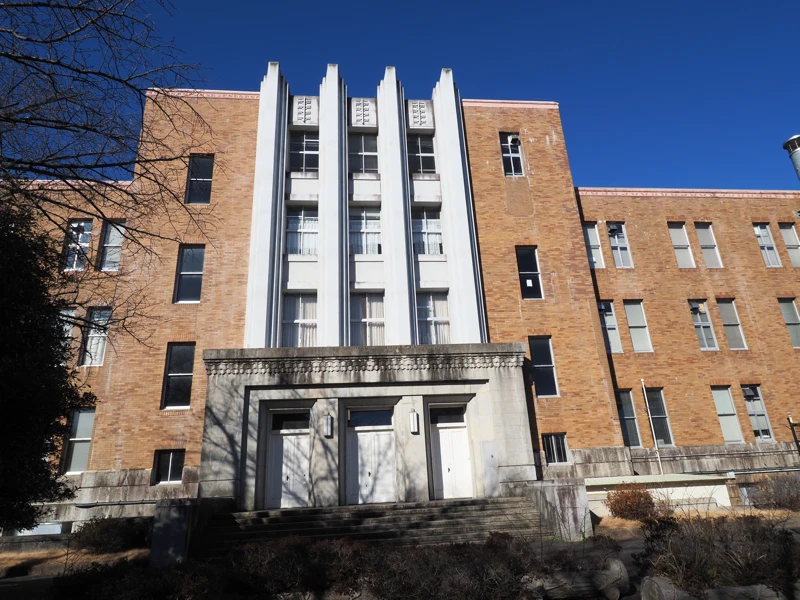
March 11, 2011.
During the Great East Japan Earthquake, most areas of Ibaraki Prefecture recorded seismic intensity levels of 6 upper to 6 lower. In Mito City alone, the damage included 7 fatalities, 74 injuries, 164 completely destroyed homes, 1,903 partially destroyed homes, and 27,577 homes with partial damage.
Due to its extension, the fourth floor section of the Sannomaru Government Building had low seismic resistance, concentrating damage on the fourth floor and tower structure, including cracks and falling exterior walls. To ensure safety, the fourth floor was demolished. Then seismically reinforced, while the tower structure was completely demolished and rebuilt.
December 2012, restoring the building to its original state.
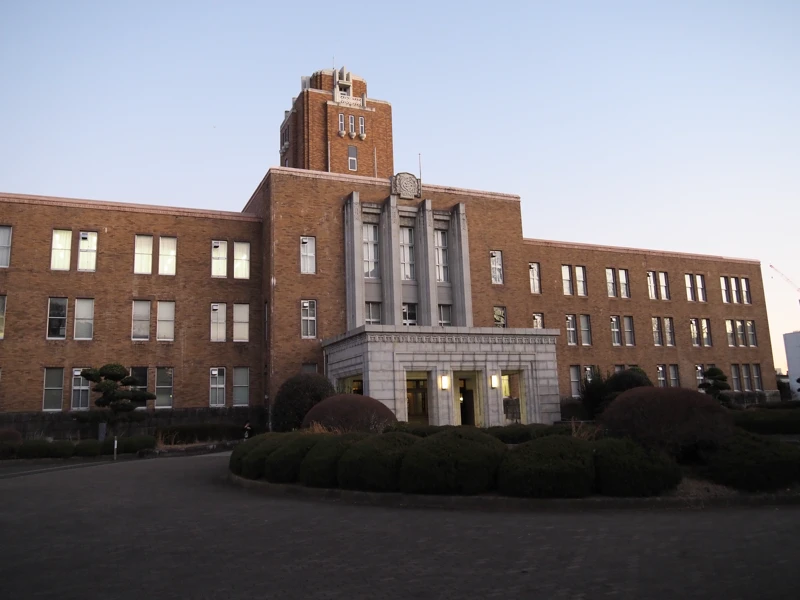
The last photo, like the first one, was taken in the evening.
I hope it continues to be used just as it is.
[Reference] (all written in Japanese)
"Commemorative Photo Album of the Imperial Review of the Army Special Grand Maneuvers" (Photographs by Shimotsuke Shimbun Photo Department / Shimotsuke Shimbun / 1929)
“Record of the Imperial Army Special Grand Maneuvers and Imperial Visit to Ibaraki Prefecture, Showa 4” (Ibaraki Prefecture / 1931)
“Record of the Great East Japan Earthquake” (Published on the Ibaraki Prefecture website / 2013)